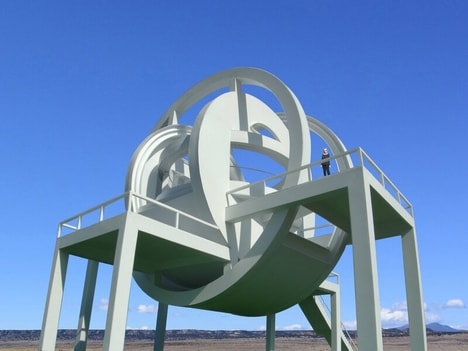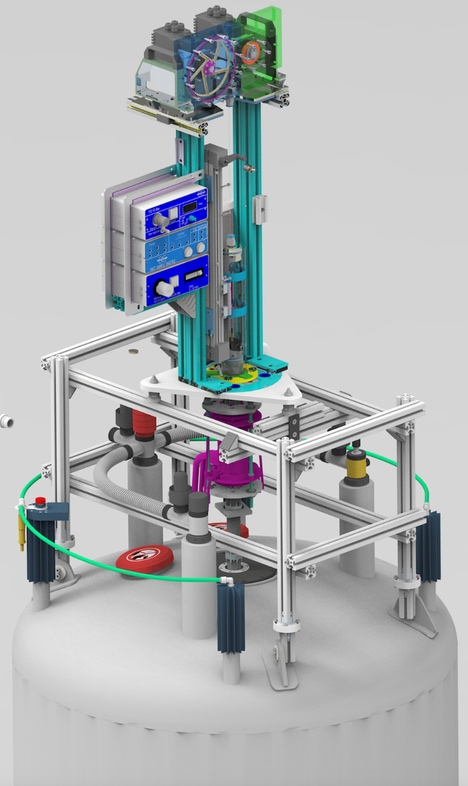

MACE is a newly launched particle physics experiment in China that searches for spontaneous transformations of its muonium antimatter twin, antimuonium, featuring ultra-precise beams and detectors. Led by researchers at Sun Yat-sen University and the Institute of Modern Physics of the Chinese Academy of Sciences, the project targets an elusive process that would violate lepton flavor conservation in the Standard Model. By focusing on this clean leptonic system, the experiment offers a direct way to test whether hidden forces or particles alter how fundamental matter behaves.
The MACE setup pushes sensitivity more than 100 times beyond a 1999 benchmark, aiming to detect conversion probabilities as low as 10⁻¹³. This leap relies on a powerful surface muon beam, a custom silica aerogel target for efficient muonium production, and finely tuned detectors that can distinguish genuine signals from overwhelming background noise. In an initial Phase I, MACE also studies rare muonium decay channels and lepton flavor–violating events, broadening its scientific reach.
Image Credit: Science Daily
Key Themes Behind This Trend
- Precision Antimatter Detection
- Advancements in beam and detector technology allow for ultra-precise tracking of antimatter transformations, potentially uncovering new physics phenomena.
- Lepton Flavor Violation Studies
- Exploration of lepton flavor violation challenges the Standard Model, offering a window into hidden forces or particles that influence fundamental interactions.
- High-sensitivity Experiments
- Innovations driving experiment sensitivity by orders of magnitude open pathways to detect rare events previously deemed undetectable.
Where This Applies
- Particle Physics Research
- Disruptive methodologies in particle physics experiments could redefine our understanding of matter and its governing forces.
- Advanced Detector Manufacturing
- Manufacturers focusing on next-generation detectors stand at the forefront of enabling unprecedented experimental sensitivity and accuracy.
- Scientific Instrumentation Development
- The demand for cutting-edge scientific instruments and precision-targeted technologies is escalating with complex experimentation needs.