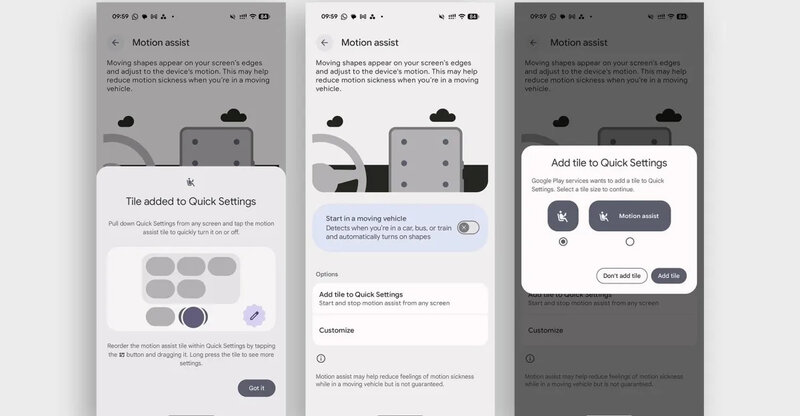
Google's Motion Assist is an Android 17 feature that places animated dots around a phone's perimeter, using the device's accelerometer and gyroscope to move those markers in sync with a car's motion. The system is designed to reduce or eliminate motion sickness when a passenger looks at a static screen by providing visual cues that match turning, braking, and acceleration.
Users can adjust the indicators' opacity and choose from multiple shapes and colors. The dots sweep in directions tied to vehicle movement (for example, dots slide left when the car turns right). The feature can engage automatically when motion is detected or be toggled via a Quick Settings tile, providing flexible control over when the visuals appear.
For passengers, Motion Assist turns static displays into dynamic peripheral references that align inner-ear signals with what the eyes see, easing nausea and making in-car screen time more comfortable. The feature uses existing motion sensors to deliver this effect and is rolling out in phases to select Pixel phones.
Image Credit: Android Authority / The Verge
What Makes This Trend Stand Out
- Motion-synced Interfaces
- Adaptive visual cues tied to real-world movement create new possibilities for screens that respond to physical context and improve comfort during mobile use.
- Sensor-based Wellness Features
- Existing accelerometers and gyroscopes are becoming low-cost foundations for health-adjacent software that addresses everyday discomfort without dedicated medical hardware.
- Peripheral Visual Feedback
- Subtle on-screen indicators can transform passive displays into spatially aware interfaces that support balance, focus, and usability in motion-heavy environments.
Sectors Adopting This
- Mobile Technology
- Smartphone platforms can differentiate through context-aware accessibility and comfort tools that expand device usability across travel scenarios.
- Automotive Experience
- In-vehicle passenger entertainment is gaining room for software-led comfort enhancements that make screen use more viable during commuting and road trips.
- Digital Health
- Non-invasive nausea reduction features point to consumer wellness solutions embedded directly into everyday devices and operating systems.