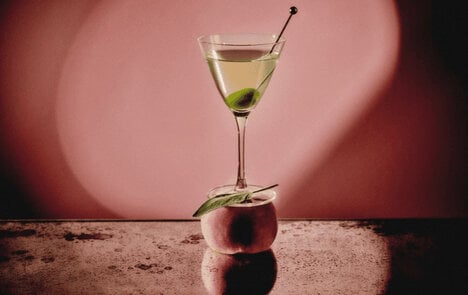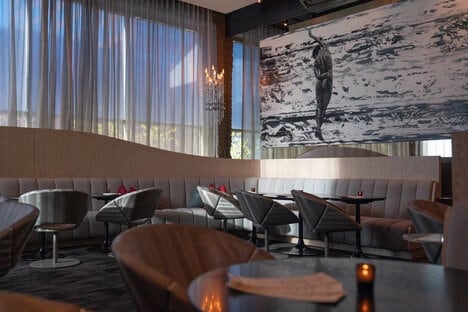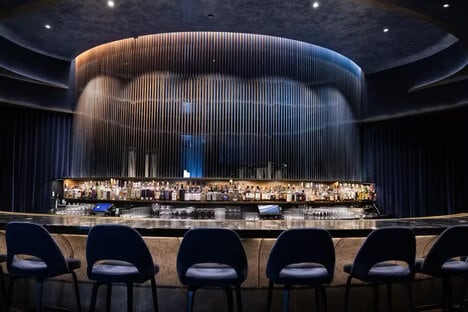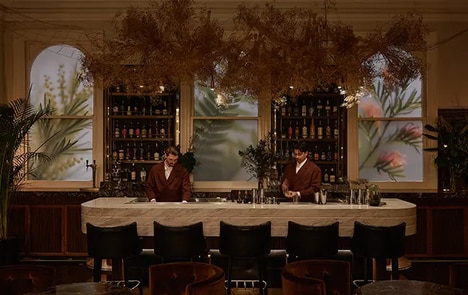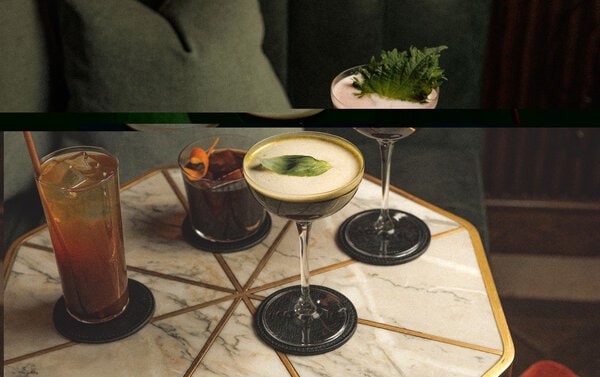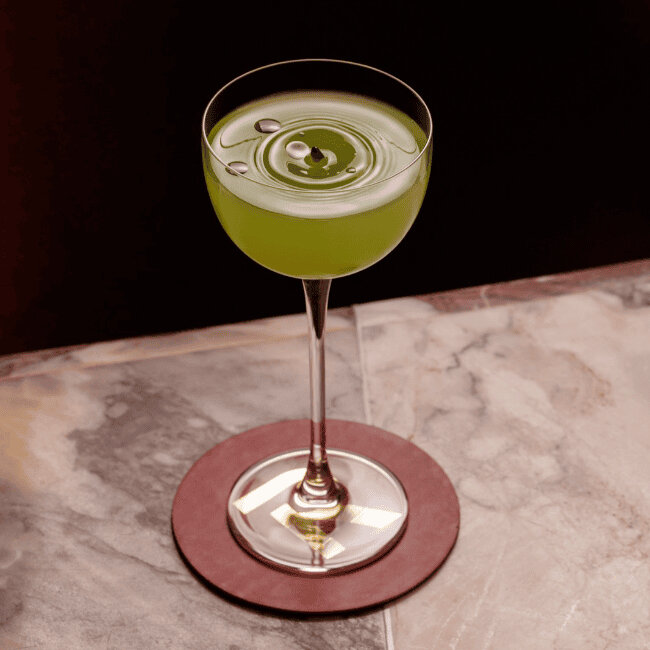
Revery Bar rebuilt its cocktail program around feelings rather than spirit categories, letting guests at the London Hilton on Park Lane choose from 15 drinks by the mood they want to match. The ‘All I Need Collection’ divides the list into five sections and turns ordering into a more guided, personal selection.
‘Confidence’ suits first dates, while ‘Release’ is built for unwinding after a long day. ‘Power Move’ uses Yaguara Cachaça with seven-year-old Havana Club rum, while ‘Off Script’ blends Patrón Silver Tequila with grapefruit, hibiscus and chili. Each section also includes a nonalcoholic option.
Revery Bar shows how a 15-cocktail menu arranged by mood can shift the hotel-bar format from a catalog of spirits to a curated decision tool, changing how guests browse before they order, while keeping an alcohol-free option in every chapter broadens the appeal to mixed groups instead of isolating non-drinkers.
Image Credit: Revery Bar
What Makes This Trend Stand Out
- Emotion-led Ordering
- Hospitality brands can differentiate menus by organizing choices around desired feelings, reducing decision fatigue while making personalization more intuitive for guests.
- Inclusive Cocktail Design
- Alcohol-free options embedded within every menu section normalize mixed drinking preferences and broaden appeal across social groups without separating non-drinkers.
- Guided Experience Menus
- Curated decision frameworks transform browsing into a more experiential part of service, allowing venues to convert standard product lists into memorable brand interactions.
Sectors Adopting This
- Hospitality
- Hotels and bars have room to reframe beverage programs as lifestyle experiences that increase guest engagement beyond traditional food-and-drink service.
- Beverage
- Spirits and nonalcoholic brands can benefit from mood-based menu placement that highlights use occasions instead of relying only on category or ingredient distinctions.
- Experience Design
- Menu architecture based on emotions creates opportunities for service environments to blend behavioral insight, storytelling and product discovery into one customer journey.