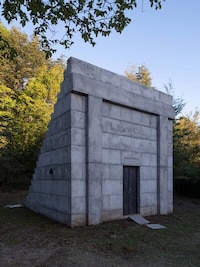
Chile-based architecture studio Pezo von Ellrichshausen has created a monolithic pavilion in Canberra, Australia. The piece, which is made up of 36 concrete columns and a circular ramp, doubles both as a work of public art and as a space for gathering. The monolithic pavilion is simply named 'Less' and Pezo von Ellrichshausen was commissioned for this design by local property developer Molonglo.
As a landmark, the Less pavilion certainly captures the attention of passers-by with its symmetrical demeanor—a regular six-by-six grid—and its sizable scale. Functionally, the monolithic pavilion leads the public to a viewpoint within the pillars via the ramp. The piece is intended to "contribute to the evolving social landscape at Dairy Road."
Image Credit: Rory Gardiner courtesy of Molonglo
What's Driving This Trend
- Monolithic Architecture
- The rise of monolithic architecture presents opportunities for the use of sustainable and eco-friendly materials.
- Functional Public Art
- Combining function and art in public spaces provides opportunities for emerging artists to showcase their talents.
- Symmetrical Design
- Symmetrical designs in architecture offer opportunities for creating visually pleasing and attention-grabbing landmarks.
Who This Affects Most
- Construction
- Construction companies can leverage the use of innovative materials and designs to create more sustainable and unique structures.
- Public Art
- The public art industry can incorporate more functional designs in public spaces to enhance the overall experience for users.
- Tourism
- Symmetrical landmarks and unique pavilions can increase tourism opportunities and boost local economies.