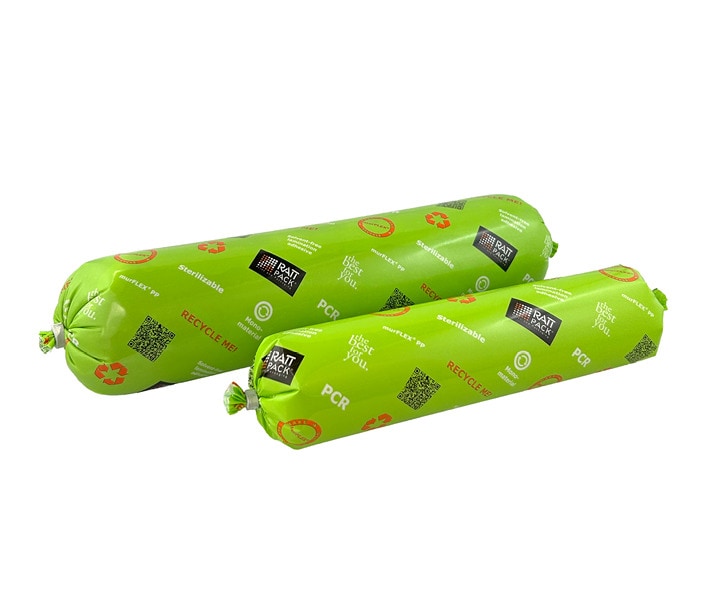
RATTPACK introduced murFLEX PP Clip Foil, a recyclable, mono-polypropylene high-barrier film designed for retort applications, featuring a multilayer structure made entirely from PP. The film targets flow packs, stand-up pouches and lidding films, offering heat-stable sealing and improved oxygen and moisture resistance for sterilized food packaging.
murFLEX was developed to replace mixed-material laminates with a single-polymer solution, combining barrier coatings and clip-foil construction to maintain performance during retort processing. The material supports conventional pouch and lid formats and is compatible with existing heat-sealing equipment.
For brands and manufacturers, murFLEX promises easier recycling streams and lower complexity in end-of-life sorting while preserving shelf-stable performance, aligning with circular packaging trends. Its single-polymer approach reduces multilayer waste without altering consumer-facing packaging formats.
Image Credit: RATTPACK
Key Themes Behind This Trend
- Mono-polymer Packaging
- Enables packaging systems built from a single polymer that can disrupt multi-material laminates by streamlining end-of-life sorting and recycling compatibility.
- Heat-stable Recyclable Films
- Offers the potential to replace traditional retort-capable multilayer films with recyclable alternatives that maintain barrier and thermal performance for sterilized foods.
- Circular Packaging Simplification
- Creates opportunities to redesign packaging value chains around reduced material complexity, lowering contamination risks and improving recycled resin quality.
Where This Applies
- Food Packaging
- Could shift product formats toward single-polymer pouches and lidding that preserve shelf stability while enabling easier recovery and recycling after use.
- Retail Consumer Goods
- May prompt retailers and brands to prioritize packaging portfolios that deliver comparable consumer experience with reduced material diversity for downstream processing.
- Recycling and Waste Management
- Presents possibilities for more efficient sorting streams and higher-value recycled polypropylene outputs by lowering mixed-material contamination rates.