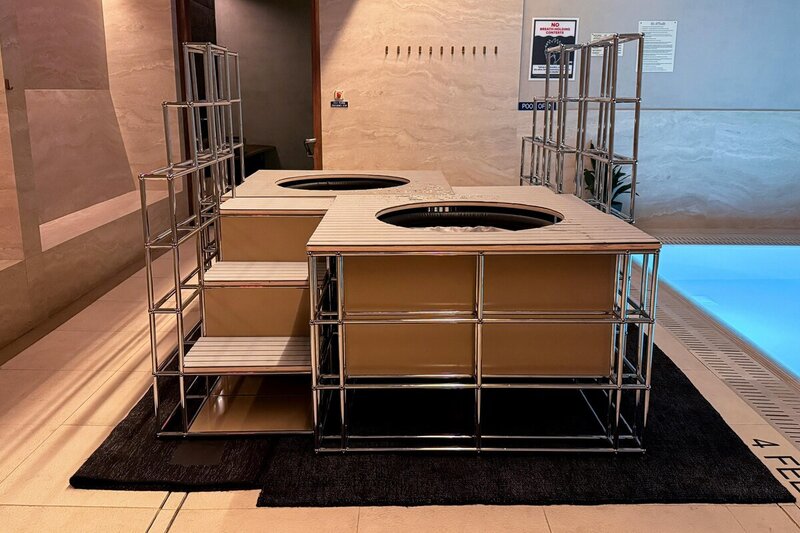
New Balance and USM turned recovery into a physical setup with modular wooden cold plunge baths for marathon runners. The collaboration gives New York marathon runners a place to cool down after hard training and before the finish-line push, for a more direct recovery routine.
The baths use USM's chrome bars as support, bringing the furniture maker's signature hardware into a sports recovery format. Wooden construction softens the look while keeping the installation built around a sturdy frame.
A recovery station built for marathon runners moves a normally personal ritual into a shared, branded experience. The modular build also makes the format easier to adapt to event spaces or pop-up recovery zones, which widens how athletic brands can think about post-race support.
Image Credit: New Balance, USM
What's Driving This Trend
- Modular Recovery Stations
- Portable, adaptable wellness installations are reshaping athlete support by turning recovery into a scalable experience for races, training hubs, and branded pop-ups.
- Branded Athletic Wellness
- Sports brands are extending beyond gear into immersive recovery environments that deepen community engagement and reinforce performance-focused identities.
- Design-led Recovery
- Furniture-grade materials and refined modular systems are elevating sports recovery products into aesthetically appealing fixtures for public and premium wellness spaces.
Who This Affects Most
- Sports Performance
- Event organizers and athletic brands can integrate shared recovery infrastructure that makes post-training care more visible, accessible, and commercially distinctive.
- Wellness Hospitality
- Hotels, fitness clubs, and destination wellness venues are positioned to adopt modular plunge formats that blend recovery rituals with flexible guest experiences.
- Furniture Design
- Modular furniture makers have room to expand into functional wellness environments where structural systems become platforms for health-focused installations.