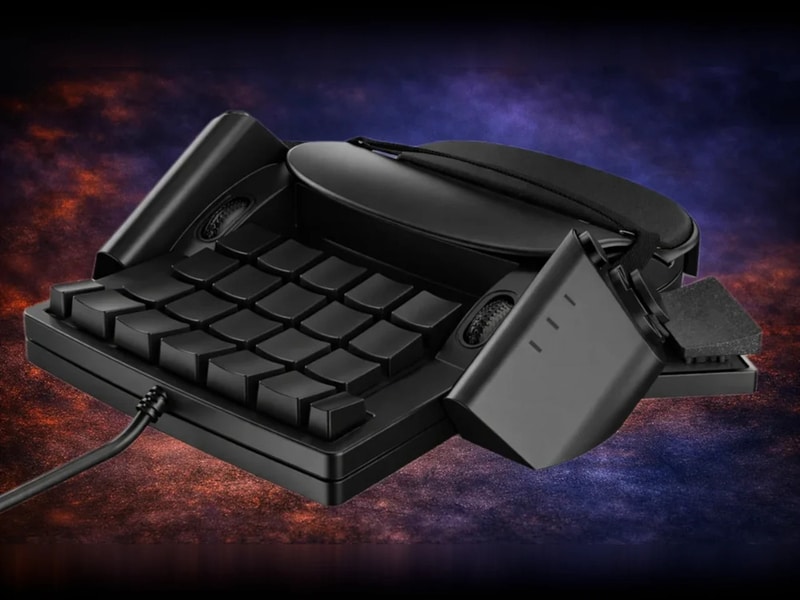
The Ercham MK1 controller introduces a one-handed input system designed to replace the traditional keyboard and mouse setup. The Ercham MK1 controller was developed by Joe Tomasulo after losing his right arm in a motorcycle accident, leading him to build a device that allows full control with one hand. It integrates an optical sensor underneath the unit, enabling it to function as a mouse while a compact grid of over 30 programmable keys handles input simultaneously.
The design places all controls within natural finger reach, supported by a strap system that stabilizes the hand during extended use. Angled control modules and dual-side inputs allow the device to be used with either hand, departing from standard gaming keypads that typically favor left-hand use. The layout supports gaming, productivity tasks, and macro-based workflows, with programmable inputs allowing customization across applications.
Image Credit: Joe Tomasulo
What's Driving This Trend
- One-handed Input Systems
- A growing focus on compact, single-handed controllers suggests novel form factors that could replace dual-device setups for many users.
- Ambidextrous Controller Design
- Designs that support equal functionality for left- and right-handed use indicate opportunities for inclusive product lines that broaden market reach.
- Integrated Pointing and Key Grids
- Convergence of optical sensors with dense programmable key arrays points to new hybrid devices that combine precision pointing and complex input in one unit.
Who This Affects Most
- Gaming Hardware
- Next-generation controllers with one-handed layouts present possibilities for differentiated peripherals targeting competitive and accessibility-conscious gamers.
- Assistive Technology
- Adaptive input devices tailored to users with limb differences reveal avenues for personalized hardware and software ecosystems that enhance independence.
- Productivity Software
- Macro-driven workflows and compact key grids suggest opportunities for software platforms to optimize application-specific mappings and context-aware shortcuts.