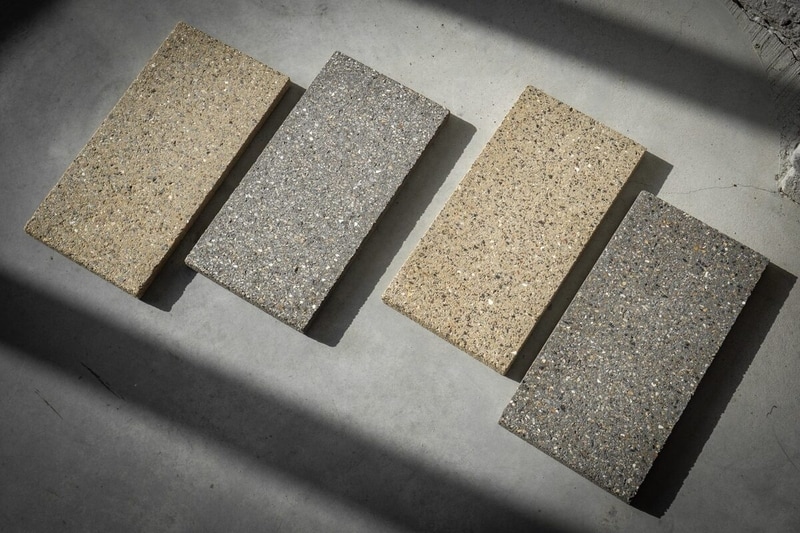
Mimmik is a low-carbon flooring tile developed by Dutch sustainability platform Front and biotechnology company Biomason. Designed for commercial applications, the tile is produced using Biomason’s Zymecrete technology, which relies on bacteria to bind carbon and calcium through natural biological processes. The resulting material forms a durable, marble-like structure with a concrete-like appearance and performance. Front describes Mimmik as the first bacteria-grown tile to reach industrial-scale production.
According to the companies, the tiles reduce carbon emissions by at least 60 percent compared with traditional cement-based materials. The transparent nature of the Zymecrete binder allows the colour and character of the aggregate materials to remain visible, creating varied surface finishes influenced by local geological resources. The tiles combine biological manufacturing methods with the durability and functionality required for commercial flooring environments.
Image Credit: Front
Key Themes Behind This Trend
- Biofabricated Building Materials
- Bacteria-based binders point to a new class of construction surfaces that deliver cement-like performance with substantially lower embodied carbon.
- Carbon-negative Interiors
- Commercial spaces are becoming testing grounds for materials that store or reduce carbon while maintaining the durability expected from conventional finishes.
- Localized Aggregate Design
- Regionally sourced minerals and aggregates enable distinctive surface aesthetics while reducing dependence on standardized, emissions-intensive material supply chains.
Where This Applies
- Commercial Flooring
- Low-carbon tiles with concrete-like strength create room for differentiated flooring products suited to offices, retail spaces, hospitality venues, and institutional buildings.
- Biotechnology
- Industrial microbial processes are expanding beyond pharmaceuticals and food into scalable material production for the built environment.
- Construction Materials
- Cement alternatives made through biological mineralization introduce competitive pathways for reducing emissions in high-volume architectural products.