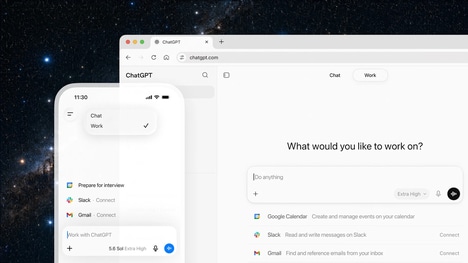
OpenAI will retire ChatGPT Classic on January 30, 2027 and move desktop users to its newer app, which puts ChatGPT, Work and Codex in one window. Classic users keep their conversation history when they switch, and the newer app supports features the older version no longer handled reliably.
In the coming weeks, a small group will test a merged Chat and Work view inside that desktop app. It lets people bring in files or plugins, then ask ChatGPT to make a website or presentation while they guide the work; Codex stays separate, but ChatGPT and Codex will pull from one shared usage allowance.
A shared allowance for ChatGPT and Codex cuts the friction of separate caps when users move between chat and task work. The January 30, 2027 shutdown makes the combined desktop app OpenAI's default route, shifting expectations toward AI software that handles conversation and execution in one place.
Image Credit: ChatGPT
What's Driving This Trend
- Unified AI Workspaces
- Combining chat, coding, files, and plugins in one interface creates room for platforms that replace fragmented productivity stacks with continuous AI-assisted workflows.
- Shared Usage Allowances
- Pooled access across conversational and task-based AI tools signals potential for pricing models that reduce friction as users shift between ideation and execution.
- Conversation-to-execution Interfaces
- AI apps that turn guided dialogue into websites, presentations, and other outputs point to new software experiences where instructions and deliverables live in the same workspace.
Who This Affects Most
- Productivity Software
- Merged AI desktops could reshape productivity tools by making document creation, project work, and automation feel like extensions of a single conversational environment.
- Enterprise Collaboration
- Shared chat-and-work systems introduce opportunities for team platforms that blend communication, file context, and AI-generated task completion into everyday operations.
- Software Development
- Integrated access to ChatGPT and Codex highlights a shift toward development environments where planning, prompting, and code generation are managed through connected AI workflows.