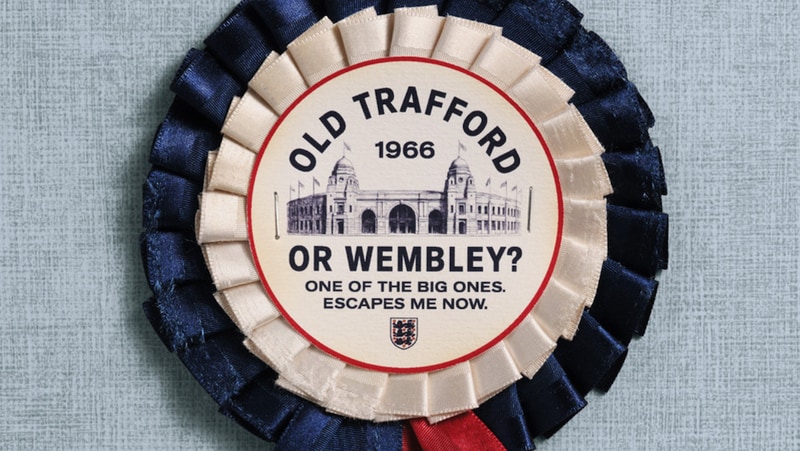
The first match of the 2026 FIFA World Cup is just days away, and to mark England’s legendary 1966 World Cup victory and highlight the impact of dementia, Alzheimer’s Society launched Lost Memorybilia, a campaign that revives memorabilia from the 1966 World Cup. To underscore the devastating way that dementia steals memories that people think will be with them forever, the campaign leverages a current moment in culture to bring relevance to items inspired by the past, including a hand-woven scarf that forgets England’s opponents in the final, a rosette misremembering the stadium of the last match, and a collectible-style coin that struggles to name Sir Geoff Hurst.
Lost Memorybilia coincides with an in-color rerun of the final on Channel 4, raising funds for Alzheimer’s Society.
Why This Trend Is Growing
- Memory-eroding Merchandise
- Collectibles that intentionally distort familiar details create emotionally resonant products that translate invisible health conditions into tangible public awareness tools.
- Nostalgia-led Fundraising
- Historic sports memories are becoming powerful donation gateways as charities connect beloved cultural moments with urgent social and medical causes.
- Contextual Cause Marketing
- Timely campaigns tied to major broadcasts or events can turn passive audience attention into deeper engagement with complex issues like dementia.
Industries Being Reshaped
- Nonprofit Fundraising
- Charities are finding new value in limited-edition artifacts and experiential storytelling that make abstract missions feel personal and shareable.
- Sports Memorabilia
- Traditional keepsakes can evolve into message-driven collectibles where imperfections, omissions, and altered details carry meaning beyond fandom.
- Broadcast Media
- Televised archival content offers a platform for integrated social impact campaigns that blend entertainment, memory, and charitable giving.