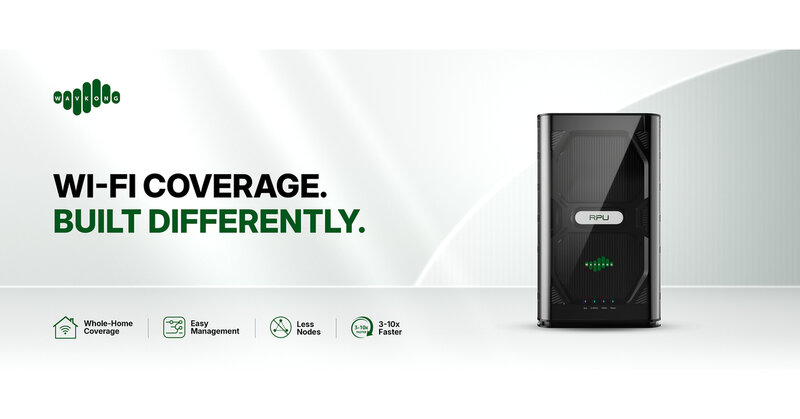
WavKong is advancing long-range Wi-Fi routers with the commercial launch of its V2700, designed to extend wireless connectivity across large properties without requiring numerous networking devices. Its proprietary Radio Processing Unit (RPU) chip uses advanced digital processing to reduce signal distortion, helping maintain reliable connections in distant rooms and outdoor spaces.
Developed over six years, the router incorporates signal-processing techniques traditionally used in cellular infrastructure. Company testing recorded coverage reaching 15,000 square feet across indoor and outdoor areas. At one garden location, the V2700 achieved 123 Mbps compared with 4.2 Mbps using a competing mesh configuration. Actual performance depends on environmental conditions.
For WavKong, the launch creates opportunities to reach households seeking simpler networking solutions. Following a Kickstarter campaign that raised over $400,000, the company can expand commercial sales while offering an alternative to multi-device wireless setups.
Image Credit: WavKong
What's Driving This Trend
- Single-device Connectivity
- Large-property households gain a simpler alternative to mesh networks as advanced routers consolidate coverage into fewer hardware points.
- Cellular-grade Wi-fi
- Signal-processing methods borrowed from telecom infrastructure create new performance expectations for consumer networking equipment in challenging environments.
- Outdoor Wireless Expansion
- Reliable coverage across gardens, yards, and detached spaces broadens the role of home Wi-Fi beyond interior living areas.
Who This Affects Most
- Consumer Electronics
- Router makers can differentiate through proprietary chips and long-range performance rather than competing only on speed or device count.
- Smart Home Technology
- Expanded wireless reach supports connected cameras, sensors, and appliances across larger properties without complex network installation.
- Telecommunications Infrastructure
- Consumer adoption of cellular-style signal processing highlights cross-market potential for technologies traditionally reserved for carrier-grade systems.