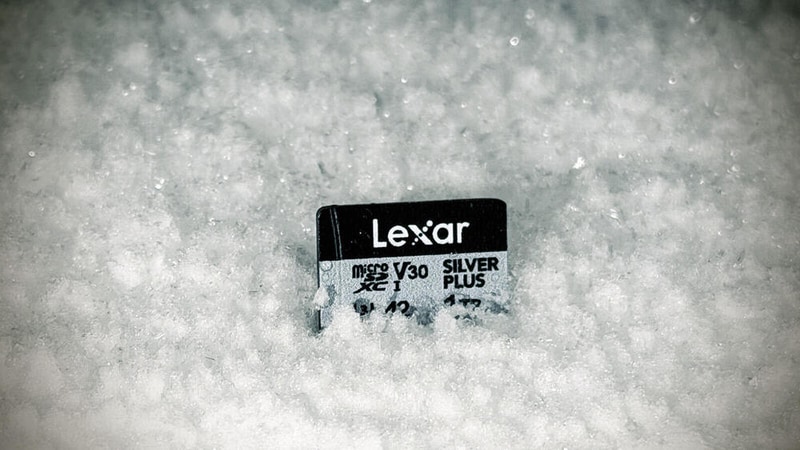
The 'Lexar Silver Plus 1TB' microSDXC card as a high-capacity option aimed at enthusiasts and semi-professionals, featuring a 400 MHz controller and rated read/write speeds of up to 205 MB/s and 150 MB/s. The card is V30, U3 and A2 rated, meaning it guarantees minimum sustained write speeds for video (V30/U3) and higher input/output operations per second for apps (A2).
Physically, the Silver Plus is built for rugged use with IPX7 water resistance, wide operating and storage temperature ranges, X-ray protection and shock, drop and vibration tolerances; Lexar also backs it with a lifetime warranty. Benchmarks in real-world tests landed within about 10% of the rated specs, and the card supports demanding codecs including H.265 8K 60FPS and 4K Apple ProRes 422 HQ where camera support allows.
For creators, the card offers a balance of large capacity, sustained performance and durability that simplifies long shoots and remote workflows, while the lifetime warranty adds peace of mind. Its positioning matters amid a move toward single-card storage for high-resolution capture, though users should weigh the risk of consolidating irreplaceable footage on one large card versus using multiple smaller cards.
Image Credit: Lexar
What's Driving This Trend
- Single High-capacity Removable Storage
- Consolidation of large video and data files onto single 1TB microSDXC cards shifts storage architectures toward compact, portable media with implications for on-location workflow design and risk concentration.
- Ruggedized Media for Field Workflows
- Waterproof, shock- and X-ray-resistant cards with wide operating-temperature ranges enable prolonged remote and harsh-environment production cycles that reduce dependence on immediate offloading and protective peripherals.
- Performance-rated Cards for Pro Codecs
- Guaranteed V30/U3/A2 ratings and sustained read/write speeds supporting H.265 and ProRes introduce consistent performance tiers that influence camera pairing, real-time recording reliability, and storage-tier planning.
Who This Affects Most
- Professional Videography and Film Production
- High-capacity, high-throughput microSDXC cards alter location shooting logistics and asset management strategies by enabling longer continuous recording and denser media consolidation for high-resolution formats.
- Consumer Electronics and Camera Manufacturers
- The availability of robust, fast removable storage at consumer price points affects device design choices around internal storage omission, single-slot camera architectures, and certified performance partnerships.
- Data Backup and Archival Services
- Large-capacity removable cards introduce alternative physical-archive models that change retention, redundancy planning, and long-term integrity verification for media-centric businesses.