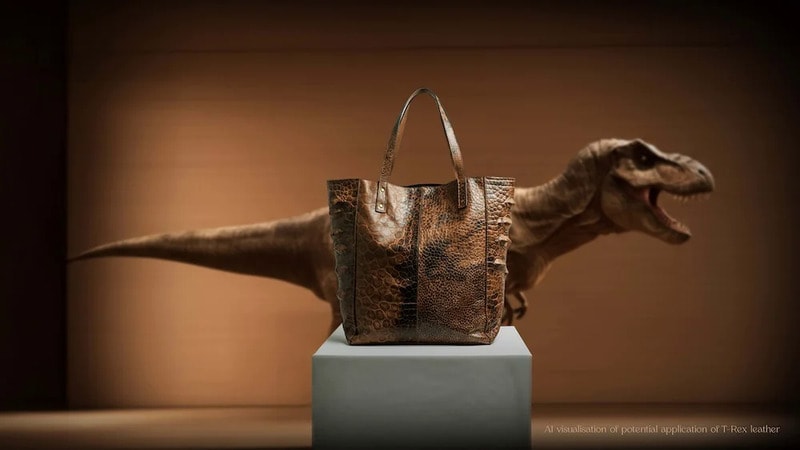
Lab-Grown Leather Ltd works with creative agency VML on a special project using fragments of fossilized collagen collected from an 80-million-year-old T Rex's remains. The team has reconstructed the genetic code and inserted this synthetic DNA into animal cells and then grown it on a proprietary scaffold-free platform.
The team plans to create a material that has the same look and feel as traditional leather in an eco-friendly way. Traditional leather has been manufactured in ways that are connected to negative impacts on the environment. The creation of this process will be used to create a line of handbags. Instead of imitating leather, they aim to grow it and bring a sense of resistance through premium textile qualities.
Image Credit: VML
What Makes This Trend Stand Out
- Sustainable Leather Alternatives
- The development of lab-grown leather using DNA offers an eco-friendly option that could disrupt traditional leather manufacturing methods.
- Genetic Material Fashion
- Using synthetic DNA in fashion production represents a novel approach that merges biological innovation with design, paving the way for unique materials.
- Dinosaur-themed Consumer Products
- The use of fossilized dinosaur collagen in products taps into consumer fascination with prehistoric themes, potentially sparking new interest in themed fashion.
Sectors Adopting This
- Biotechnology
- The integration of synthetic DNA and cell cultivation techniques in product manufacturing highlights the expanding overlap between biology and industrial production.
- Luxury Fashion
- High-end bags crafted from lab-grown leather illustrate a shift towards sustainable luxury goods that appeal to environmentally-conscious customers.
- Eco-friendly Textiles
- The creation of eco-conscious leather-like materials addresses demand for sustainable textile alternatives in the global fashion industry.