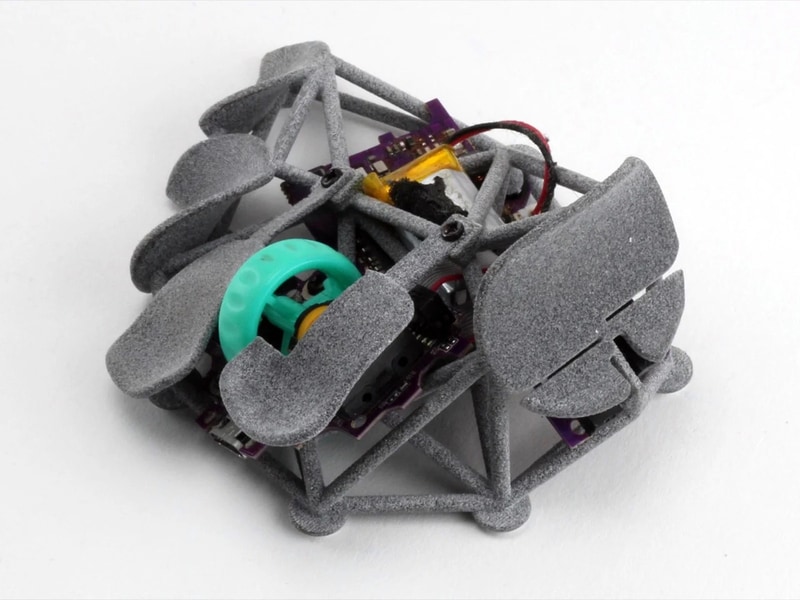
The Kotinos is an experimental wireless mouse created by psudoku that replaces the traditional mouse shell with a lightweight 3D-printed framework. Instead of supporting the entire hand, the design uses individual fingertip pads mounted on a skeletal structure, allowing the palm to remain suspended above the device. Built around donor components from the HSK Pro mouse, the project is fully customizable through OpenSCAD scripts, enabling users to adjust dimensions and finger positions to suit their own hand size.
The open-frame construction exposes the mouse’s internal electronics, including the circuit board, scroll wheel assembly, wiring, and sensors. Available as a free open-source project, Kotinos can be fabricated using consumer 3D-printing methods and assembled with salvaged hardware. The design explores an alternative approach to ergonomic input devices by reducing hand contact to a few strategically placed points rather than relying on a full palm-supporting shell.
Image Credit: psudoku
Key Themes Behind This Trend
- Open-frame Ergonomics
- Skeletal product architectures create room for lighter, cooler, and more personalized hardware experiences that challenge conventional assumptions about comfort and support.
- Parametric Peripheral Design
- Adjustable OpenSCAD-based dimensions point to a future where input devices are generated around individual anatomy rather than standardized hand-size categories.
- Salvaged Component Customization
- Repurposed electronics combined with consumer 3D printing expand access to niche device experimentation while reducing dependence on fully manufactured retail products.
Where This Applies
- Computer Peripherals
- Minimal-contact mouse designs reveal new possibilities for performance, accessibility, and ergonomic differentiation in a category long dominated by molded shell formats.
- Consumer 3D Printing
- Free fabrication files and desktop-printable structures position home manufacturing as a practical pathway for personalized electronics enclosures and functional device upgrades.
- Ergonomic Technology
- Finger-specific support systems suggest a shift from universal comfort products toward anatomy-responsive tools for work, gaming, and assistive computing environments.