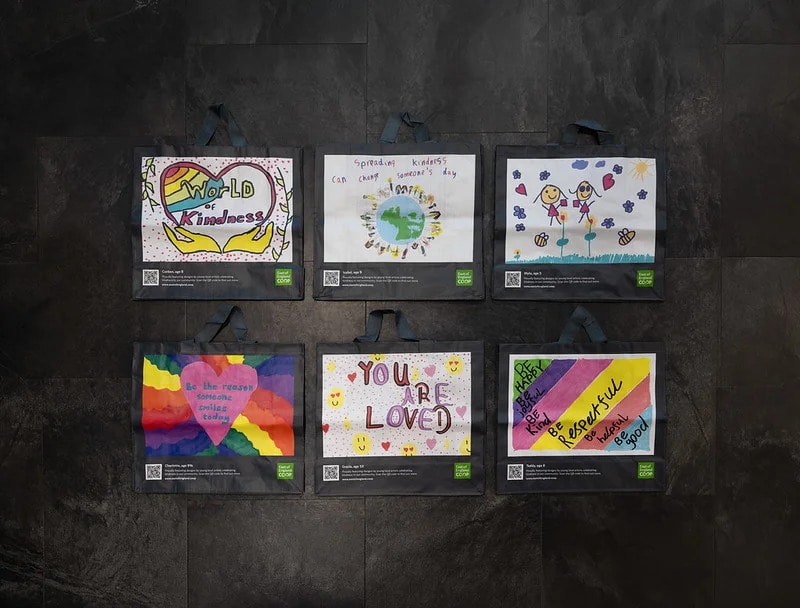
Kid-designed retail bags are being introduced by East of England Co-op as part of a community-driven initiative that transforms children’s artwork into limited-edition shopper bags. By featuring designs created by local children, the retailer creates a stronger emotional connection with customers while turning everyday items into meaningful expressions of kindness and positivity. The approach highlights a growing shift toward products that reflect community values and personal stories.
This strategy helps build brand loyalty by encouraging local participation and reinforcing a sense of shared identity. It also positions East of England Co-op as a socially conscious retailer, which can influence purchasing behavior. As consumers increasingly seek purpose-driven products, other brands may explore similar approaches that combine community engagement with charitable giving to strengthen relationships and drive sales.
Image Credit: East of England Co-op
What Makes This Trend Stand Out
- Community-designed Products
- Retail assortments featuring locally created artworks create new models where everyday goods double as hyper-local cultural artifacts tied to neighborhood identity.
- Purpose-driven Packaging
- Packaging that carries community narratives and charitable pledges shifts commodity containers into purpose-led touchpoints that influence purchase decisions and brand perception.
- Child-led Brand Storytelling
- Brands foregrounding children’s perspectives generate emotionally resonant narratives that redefine authenticity and can command premium positioning through perceived social value.
Sectors Adopting This
- Retail-grocery
- Community-sourced design initiatives offer grocers differentiation by converting routine shopping trips into locally meaningful experiences that deepen customer loyalty.
- Packaging-manufacturing
- Manufacturers capable of economical small-batch, customizable production unlock demand for limited-edition runs that marry personalization with scalable supply chains.
- Charity-tech Platforms
- Digital platforms linking product sales to local giving create infrastructure for transparent micro-donations and community impact tracking tied to consumer purchases.