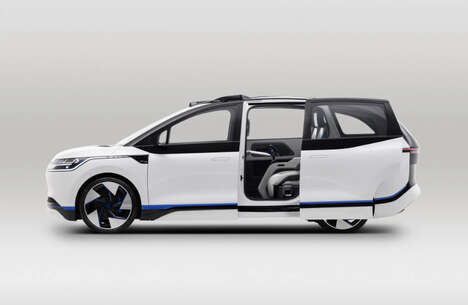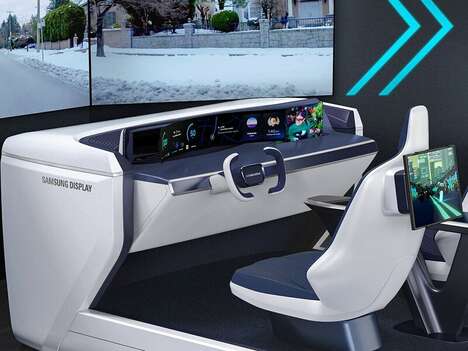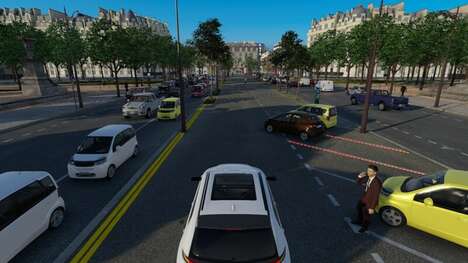

Because of necessary regulation, self-driving vehicles are difficult to test in the real world, so the South Korean government has responded with the erection of K-City. Rather than lifting the regulations altogether and allowing for testing of potentially unsafe vehicles, K-City is a massive testing ground in the East Asian nation designed to mimic the conditions of real urban and suburban environments without exposing any actual citizens to that testing.
K-City is an 80 acre parcel of land 20 miles south of Seoul. The space includes a wide range of simulated driving environments, including highways, downtown areas, city outskirts, and communal spaces like pedestrian crossings, toll gates, construction sites, and more. Due to its wide range of conditions, companies like Waymo, Samsung, Hyundai, and Kia Motors are making use of the space.
Key Themes Behind This Trend
- Autonomous Vehicle Testing
- Creating dedicated spaces for testing self-driving cars allows companies to safely develop and improve the technology.
- Simulated Driving Environments
- Designing realistic urban and suburban environments for testing enables companies to evaluate the performance of autonomous vehicles in various scenarios.
- Collaborative Testing
- Companies from different industries can come together to utilize the shared testing space and accelerate the advancement of autonomous driving technology.
Where This Applies
- Automotive
- Automakers like Hyundai, Kia Motors, and Waymo can leverage the testing ground to refine their self-driving technologies.
- Technology
- Tech companies, such as Samsung, can utilize K-City to test and improve the integration of AI and autonomous systems in vehicles.
- Infrastructure
- Companies involved in urban planning and infrastructure development can collaborate with the testing site to create smart cities that can accommodate autonomous vehicles.