SSSTC moved into industrial QLC storage with the ‘PQ2’ series, its first SSD line in that class for AI PCs and embedded hardware with read-heavy workloads. Using BiCS FLASH generation 8 QLC memory, it pushes sequential reads up to 7,000 MB/s so local AI models and app files load faster, the company says.
PQ2 comes in two M.2 formats, giving system designers more room in compact hardware such as point-of-sale terminals. Its DRAM-less layout uses Host Memory Buffer, which borrows system memory instead of adding onboard DRAM. The line also supports industrial temperatures and includes AES 256-bit hardware encryption for sensitive data that stays on-device.
SSSTC shows how a DRAM-less QLC design can serve business systems that need smaller boot drives or read-focused local storage in compact hardware.
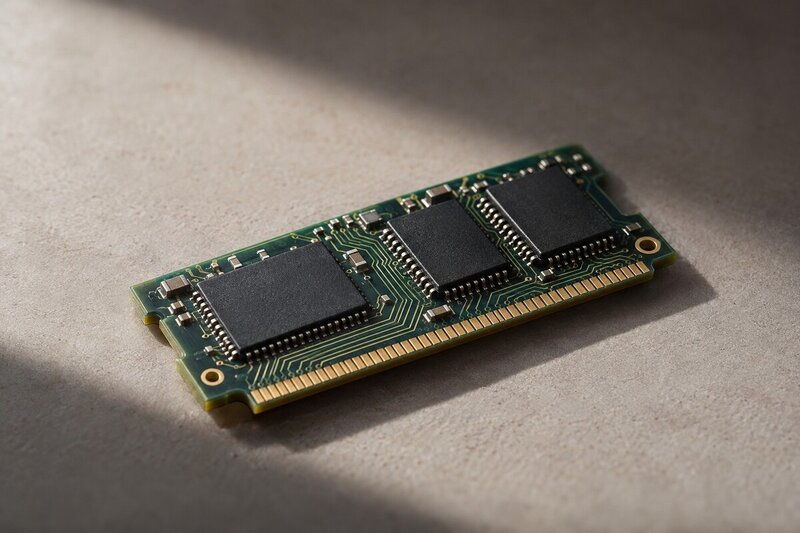
Image Credit: AI-generated
Key Themes Behind This Trend
- Industrial QLC Storage
- High-density QLC SSDs for embedded and AI PC environments create openings for lower-cost local storage optimized around read-heavy business workloads.
- Dram-less SSD Design
- Host Memory Buffer architectures reduce component complexity in compact devices while preserving performance for boot drives, application loading, and edge deployments.
- On-device AI Acceleration
- Fast local storage for AI models supports more responsive edge computing systems where data privacy, latency, and offline operation are increasingly important.
Where This Applies
- Embedded Computing
- Compact M.2 storage with industrial temperature support broadens design possibilities for ruggedized terminals, controllers, and specialized business hardware.
- AI Pcs
- Read-optimized SSDs with high sequential speeds improve local model access and application responsiveness in next-generation enterprise computing devices.
- Point-of-sale Systems
- Encrypted, space-efficient storage enables smaller retail terminals to manage sensitive data locally while supporting faster software and transaction workflows.