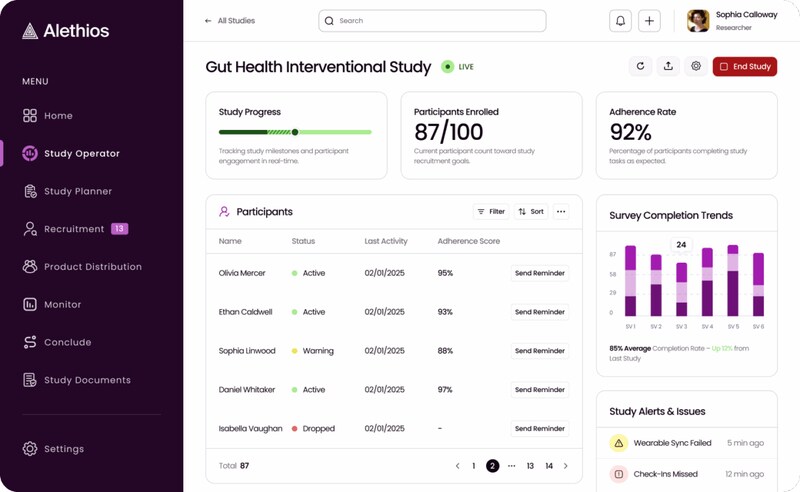
Human health research faces its barriers, and Alethios presents a software platform designed to streamline the process of conducting such studies.
Alethios provides tools for the creation and management of decentralized research. The system allows users to design study protocols — a task that traditionally requires significant time and specialized knowledge — through an interface that incorporates generative artificial intelligence to assist with planning. A key feature is the integration of various data sources, including self-reported information from participants, metrics from wearable devices, and results from at-home test kits. Alethios' human health research platform also automates logistical aspects such as recruiting volunteers and distributing study materials.
The software offering operates on a subscription model, making it financially accessible to a wider range of users beyond large institutions.
Image Credit: Alethios
What's Driving This Trend
- Decentralized Research Platforms
- Decentralized research platforms like Alethios disrupt traditional study models by enabling more researchers to conduct comprehensive studies with distributed participant networks.
- Generative AI in Health Research
- Generative AI assists researchers in designing study protocols, revolutionizing the planning phase by reducing time and expertise barriers.
- Multisource Data Integration
- Integrating data from wearables, self-reports, and at-home test kits enhances the accuracy and depth of health research conducted remotely.
Who This Affects Most
- Health Tech Software
- Health tech software innovations streamline complex research processes, making cutting-edge studies more feasible for smaller firms and individuals.
- Wearable Technology
- With integration into research platforms, wearable technology becomes pivotal in providing continuous health data and enriching participant input.
- At-home Testing Solutions
- At-home testing solutions become essential for remote health studies, offering participants reliable and convenient ways to contribute data to research.