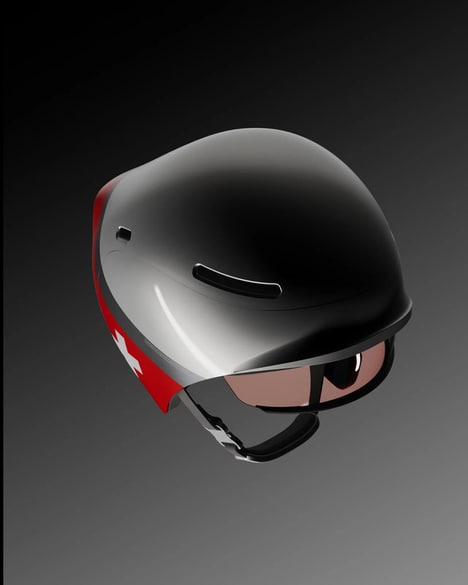
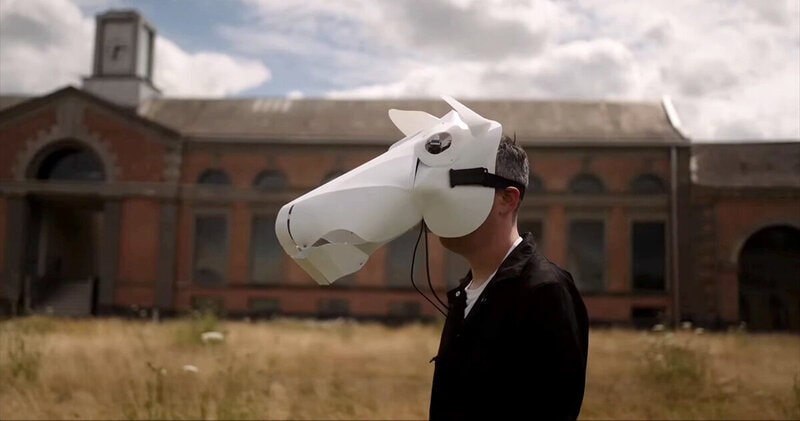
Alan Hook, a researcher and designer at Ulster University, created Equine Eyes so participants can try a horse-like view of familiar spaces. The wearable uses cameras mounted on each side of the head and sends the live image into a virtual-reality display, while its long horse-shaped shell makes the act of wearing it part of the exercise.
Two 180-degree cameras build a view near 350 degrees, and the feed shifts toward the blue-and-yellow range linked to horses' two-color vision. In July 2026, two headsets entered public and educational use at the National Museum of Racing and Hall of Fame in Saratoga Springs, New York.
National Museum placement turns a speculative design object into a discussion aid for visitors, especially people who work with horses. Hook's Interspecies Design Toolkit carries the same animal-centered thinking into design workshops, widening its use from one headset to products and buildings.
Image Credit: Alan Hook, designboom, designboom, designboom
Why This Trend Is Growing
- Animal-perspective Immersion
- VR systems that translate nonhuman sensory experiences into wearable simulations create new pathways for empathy-driven education, training, and exhibit design.
- Interspecies Design Tools
- Design frameworks centered on animal perception open opportunities for products, spaces, and services that better align with multispecies needs.
- Sensory Simulation Exhibits
- Museums and learning venues are turning speculative prototypes into interactive interpretation tools that make complex biological differences tangible for visitors.
Industries Being Reshaped
- Virtual Reality
- Specialized headsets that simulate species-specific vision suggest growth potential beyond entertainment into research, accessibility, and professional training contexts.
- Museums and Education
- Immersive animal-view experiences enrich public programming by transforming passive learning into embodied understanding for diverse audiences.
- Equine Care
- Horse-centered perceptual technologies provide trainers, handlers, and facility designers with new insight into how environments may be experienced by animals.