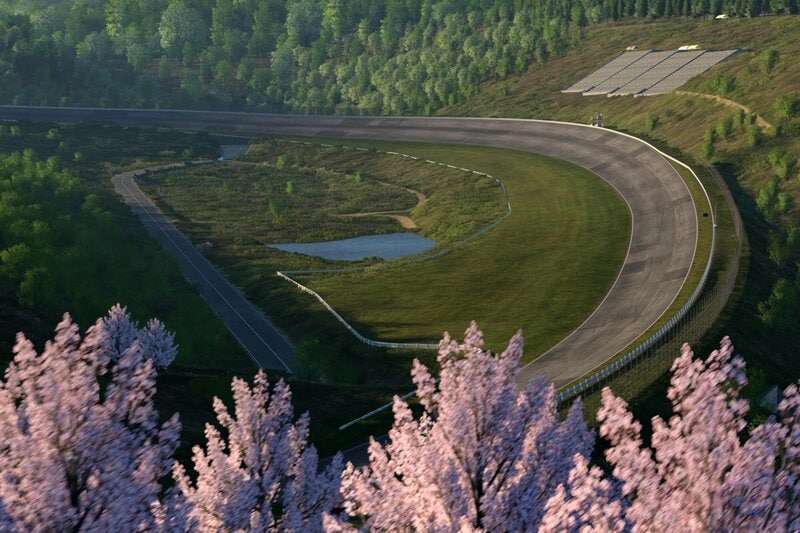
‘Project Motor Racing’ adds a historic track with Fuji Speedway’s original 1966 layout, letting players run the circuit as it existed before the modern redesign. Straight4 Studios built the DLC around the old course, including the infamous first corner that made the early layout so distinctive.
The restored turn is a 30-degree banked corner, a feature that gives the lap a very different rhythm from today’s Fuji. The pack also uses archival material from Fuji International Speedway Company, which helped the studio rebuild the venue with period details.
Classic circuits in games do more than add nostalgia; they preserve versions of tracks that are otherwise difficult to experience. By recreating Fuji’s lost layout, ‘Project Motor Racing’ widens the appeal of racing simulations for players drawn to motorsport history as much as lap times.
Image Credit: Straight4 Studios
Why This Trend Is Growing
- Digitized Motorsport Heritage
- Archival track recreations transform lost racing venues into interactive cultural assets for fans, educators, and simulation communities.
- Historically Accurate DLC
- Premium game expansions grounded in verified source material create new value through authenticity rather than fictional content.
- Retro Simulation Experiences
- Classic layouts and period-specific details broaden racing games into nostalgia-driven platforms that appeal beyond competitive players.
Industries Being Reshaped
- Video Games
- Simulation titles can differentiate through historically faithful environments that merge entertainment, preservation, and enthusiast engagement.
- Motorsports
- Legacy circuits gain renewed relevance when digital recreations extend their history to global audiences unable to experience them physically.
- Digital Preservation
- Interactive reconstructions provide a compelling format for maintaining access to culturally significant locations altered or removed over time.