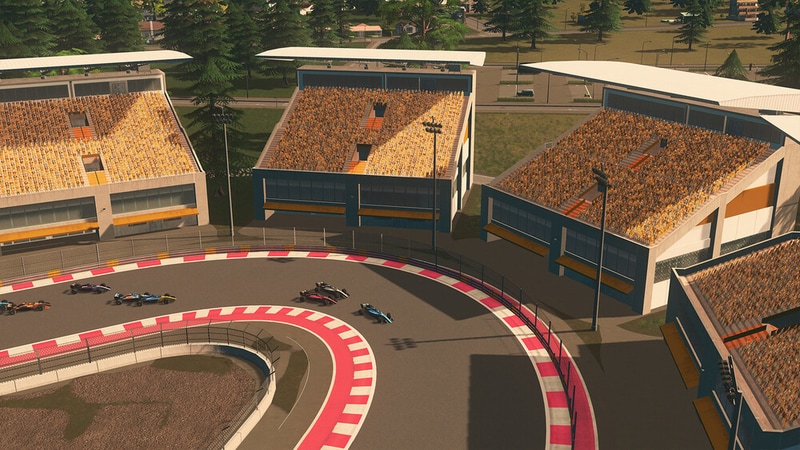
Cities: Skylines - Race Day is a new expansion for Colossal Order’s original city-builder, released by Paradox Interactive and developed by Tantalus Media, featuring racetracks, Race HQ buildings and event roads designed to host motor, cycling and running races. The pack arrived alongside a free update that added illuminated billboards, road-facing fences and an employment visualizer, all intended to extend the simulation’s civic toolset.
Paradox also scheduled a free weekend and deep discount on Steam to coincide with the launch, making the base game widely accessible ahead of the expansion. Race Day requires players to plan circuits, spectator stands and event logistics, with races temporarily altering traffic and service demands. For city-builder fans this expands gameplay loops by turning single-site stadium planning into recurring large-scale events, rewarding designers who balance spectacle with day-to-day city functioning.
Image Credit: Tantalus Media
What Makes This Trend Stand Out
- Event-driven Urban Simulation
- Simulation platforms that embed recurring large-scale events create new possibilities for modeling temporary demand spikes and multisystem interactions in urban environments.
- Infrastructure as Attraction
- Stadiums, racetracks and event roads positioned as civic attractions suggest combining public works with revenue-generating experiences that shift how infrastructure is valued.
- Dynamic Traffic and Service Modeling
- Real-time adjustments to traffic flows and municipal services around scheduled events point to sophisticated predictive tools that reconcile episodic disruptions with everyday operations.
Sectors Adopting This
- City Planning Software
- Urban design tools that simulate event logistics and spectator behavior could redefine planning workflows by incorporating episodic scenarios into standard master plans.
- Event Management
- Large-scale sporting and civic events producing transient infrastructure demand indicates opportunities for integrated logistics platforms that coordinate transport, security and services.
- Transportation Engineering
- Engineers focused on temporary lane reconfigurations and multimodal routing during events may pioneer adaptive roadway designs and intelligent traffic-control systems.