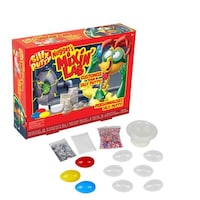
Crayola STEAM Gross Science Kit creates a playful way of teaching kids science. The activity set has enough ingredients to make “20 gross science” experiments and uses everyday household items.
According to the Crayola website, the Gross Science Kit comes with a “10 ml bottle of green ink, 10 ml bottle of red ink, 2 wooden craft sticks, plastic spatula, pipette, large measuring cup, 2 small measuring cups, eye mold, brain mold, 4 googly eyes, 10 g bottle of psyllium, 10 g pouch of gelatin, 100 g pouch of cornstarch and instruction manual.”
Kids can do fun and gross experiments like the ‘Jelly Brain,’ ‘Don’t Lose Your Lunch,’ and ‘The Perfect Runny Poo.’ Adult supervision is recommended when doing them.
Consumers can purchase Crayola STEAM Gross Science Kit on Amazon or at select retailers.
Image Credit: Crayola
What Makes This Trend Stand Out
- STEAM Education
- Creating playful and insightful ways of learning science paves the way for more interactive and innovative STEAM-based educational toys.
- DIY Experiment Kits
- DIY experiment kits with easily accessible and safe ingredients encourage hands-on activities and make learning more engaging and experimental.
- Edutainment
- Increasing the fun factor of educational toys blends entertainment and learning, making it more fun and fulfilling for children to engage themselves in steam subjects.
Sectors Adopting This
- Toys and Games
- The toy industry can leverage the growing trend of STEAM-based educational toys to cater to an increasing market in the education and entertainment sectors.
- Education Technology
- Integrating STEAM-based toys in education technology may lead to a more interactive and immersive learning experience for students of all ages.
- Household Products
- Packaging easily accessible and safe ingredients in household products to create DIY experiment kids opens up avenues for innovation and disruption in the household sector.