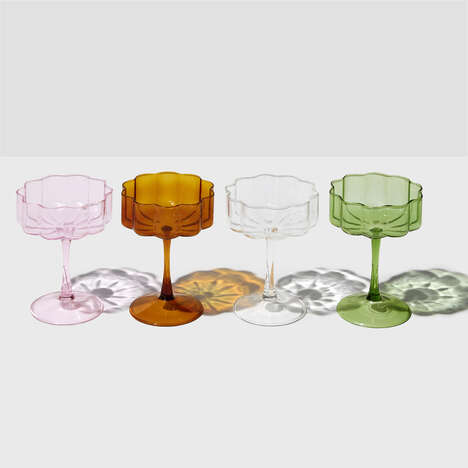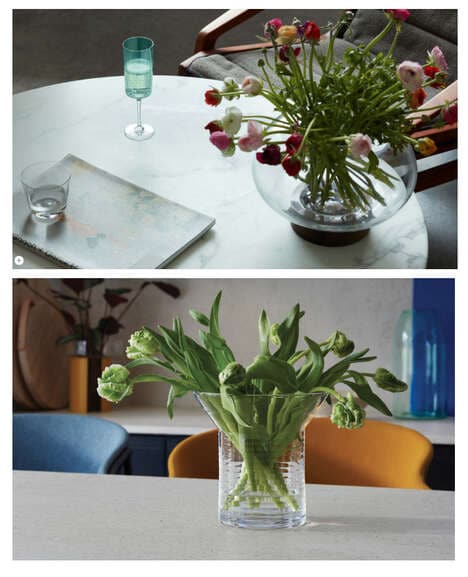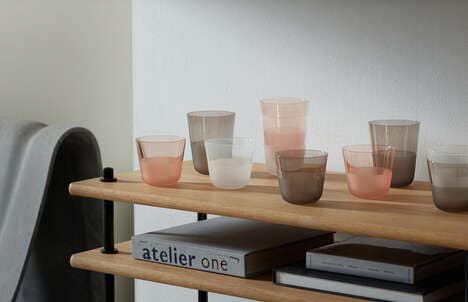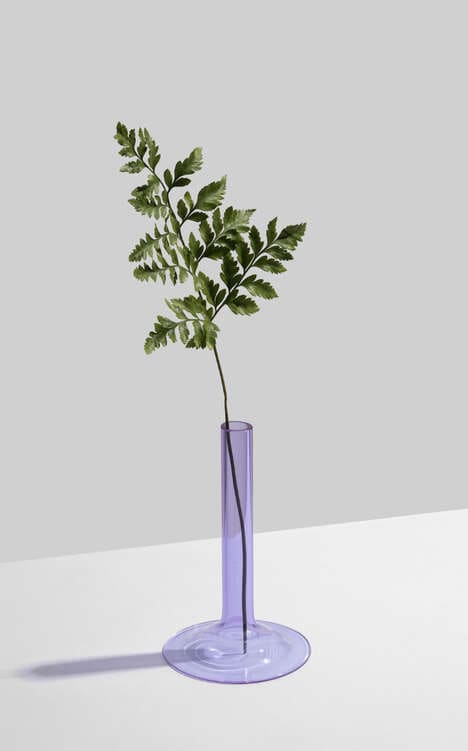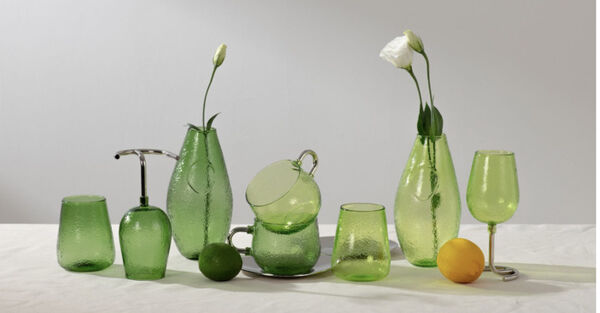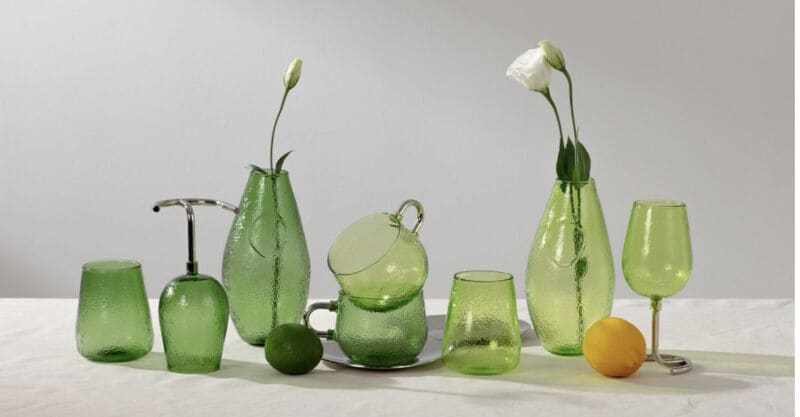
This green glassware collection is breathtakingly delicate and will undoubtedly make for an elegant addition to any home. The collection, which is poetically dubbed 'Slowly Rising,' was designed by Tongqi Lu—who is the founder of the Chinese homeware brand Tickle Quo.
The design of the green glassware follows the Japanese philosophy of wabi-sabi. Gaining popularity in the West, this Japanese aesthetic embraces the acceptance of transience and imperfection. The vessels are also inspired by "textures found in nature." About these creative references, Tickle Quo states: "when holding the glass, you can feel the bumpy surface, just as if you were feeling soil falling through your fingers."
The Slowly Rising collection includes blown glass containers—a vase, wine glasses, a coffee cup—and a metal saucer for the cup.
Image Credit: Tickle Quo
What Makes This Trend Stand Out
- Wabi-sabi Design
- The trend of applying wabi-sabi philosophy to design opportunities in homeware and lifestyle products.
- Nature-inspired Glassware
- The trend of designing glassware that mimics the textures and colors found in nature, creating an ethereal and sensory experience for the user.
- Delicate and Imperfect Aesthetic
- The trend of embracing imperfection and fragility in design, creating unique and one-of-a-kind products that challenge traditional homeware aesthetics.
Sectors Adopting This
- Homeware and Decor
- Opportunities for designers and manufacturers to create products that adhere to the wabi-sabi aesthetic philosophy and nature-inspired designs.
- Luxury Goods
- The chance to offer consumers glassware that doubles as art and creates a unique experience, capitalizing on the desire for luxury and uniqueness in high-end products.
- Eco-friendly Products
- The opportunity to make glassware that is both beautiful and environmentally friendly, using recycled materials, non-toxic dyes, and sustainable production practices.