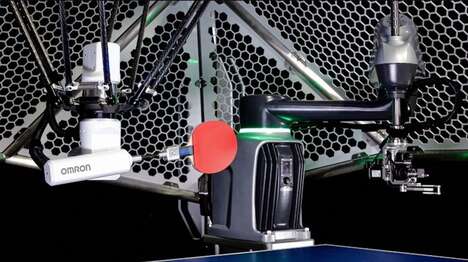
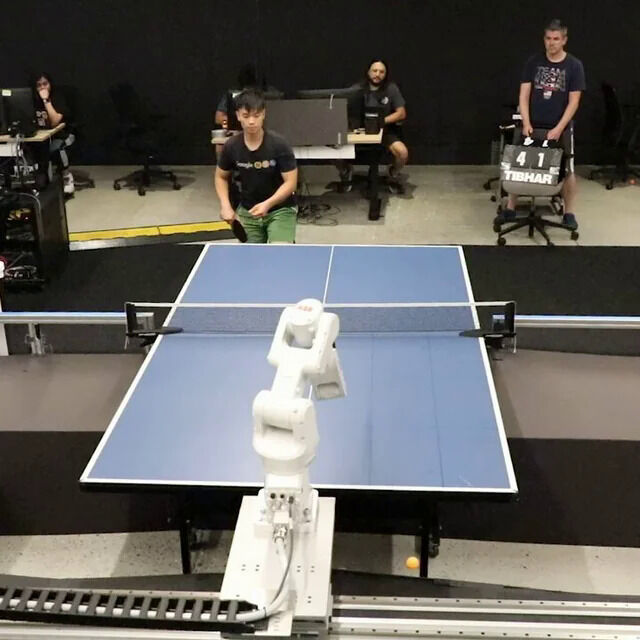
Google’s DeepMind Robotics team has presented its advancements in robotic table tennis. The research has culminated in developing a robot capable of performing at a “solidly amateur human level” when competing against human players.
The testing phase revealed that the table tennis robot excelled against beginner-level players, securing victories in all encounters. When matched against intermediate players, the robot demonstrated a commendable performance, winning 55% of the matches. However, the robot's performance significantly declined when facing advanced players, as it could not secure any wins in those matches. Overall, the system achieved a win rate of 45% across 29 games played.
DeepMind's research suggests that while the robot has made significant strides in mimicking human-level play, substantial hurdles remain before it can compete effectively against advanced players.
Image Credit: Google
What's Driving This Trend
- AI-powered Sports Training Systems
- The development of AI-driven robots capable of mimicking human athletic skills opens new pathways for affordable and personalized sports training solutions.
- Adaptive Robotic Learning
- Robotic systems that learn and adapt through real-world sports scenarios could revolutionize the way machines interact and compete in dynamic environments.
- Human-robot Competitive Platforms
- The creation of platforms where robots compete against humans showcases the potential for integrating AI into recreational and competitive sports settings.
Who This Affects Most
- Sports Technology
- Innovations in AI-assisted sports robotics are set to redefine training methodologies and player performance analytics.
- Robotics
- Advancing robotic capabilities through competitive sports highlights the evolving complexity and application potential of AI in interactive environments.
- Recreational Equipment
- The advent of robots that can play table tennis proposes exciting developments in leisure activities and equipment enhancement.