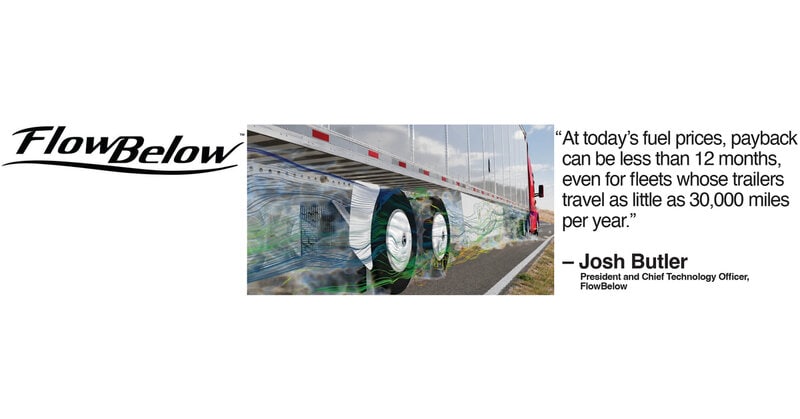
FlowBelow redesigned its 'Trailer AeroSlider' for fleets operating dry van and reefer trailers, replacing the older center-and-rear layout with a single fairing that improves fuel savings and reduces bulk. The tandem-mounted add-on fits around the trailer's wheel and suspension area, a high-drag zone where it can now deliver up to 3.0 gallons saved per 1,000 miles.
The system moves with the sliding suspension, so fleets can adjust the tandem for load and axle-weight needs without losing the aerodynamic benefit. It weighs less than 30 pounds, installs in under 45 minutes, and is available as a retrofit from FlowBelow or on new trailers through participating manufacturers.
Payback in less than 12 months turns trailer aerodynamics into a budget line tied to fuel spend, not just a spec for new equipment. Retrofit availability strengthens that case across both existing fleet maintenance and new-trailer orders.
Image Credit: FlowBelow
What Makes This Trend Stand Out
- Lightweight Trailer Fairings
- Simplified aerodynamic components with lower weight and reduced bulk create room for broader fleet adoption by improving fuel efficiency without complicating trailer operations.
- Retrofit Efficiency Upgrades
- Aftermarket fuel-saving systems are reshaping maintenance budgets by turning existing assets into platforms for measurable emissions and cost reductions.
- Sliding Suspension Aerodynamics
- Aerodynamic designs that move with adjustable trailer tandems preserve operational flexibility while addressing persistent drag around wheel and suspension zones.
Sectors Adopting This
- Commercial Trucking
- Fuel-saving trailer technologies are becoming financially attractive as fleets connect aerodynamic performance directly to operating costs and faster payback periods.
- Trailer Manufacturing
- Factory-installed aerodynamic options offer manufacturers differentiation as buyers prioritize efficiency features that complement both dry van and reefer applications.
- Fleet Maintenance
- Quick-install retrofit systems expand the role of maintenance programs from repair-focused service toward ongoing optimization of fuel consumption and asset productivity.