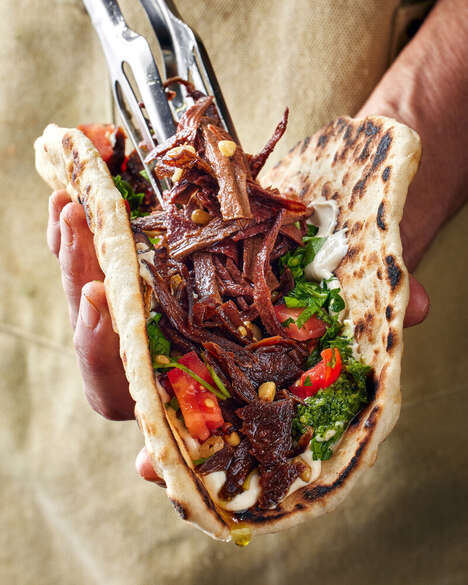

Caju Love has launched a unique and delicious cashew fruit meat that is designed to serve as a tasty, nutritious and sustainable alternative to meats such as chicken, pork and even tuna.
This cashew fruit meat is made from Brazilian cashew apples, which are often wasted and under-used after being tossed out by operations pertaining to Brazil's cashew nut and juice industries. Indeed, some 2.2 million tons of cashew fruits are wasted in Brazil each year according to Caju Love.
Considering that the cashew fruit's fibers offer a range of nutrients including vitamin C, proteins and healthy fats, it's no surprise that the fruit has properties that can support healthy blood sugars and tackle inflammation.
Caju Love's cashew fruit meat is now available for purchase at numerous in-store and online locations in the U.S.
Image Credit: Caju Love
What's Driving This Trend
- Upcycling Food Waste
- Businesses can create new plant-based meat alternatives using underused produce that would otherwise go to waste.
- Alternative Proteins
- There is an opportunity for companies to create new and nutritious meat substitutes for consumers seeking more sustainable and ethical food choices.
- Functional Foods
- Cashew fruit meat's nutrient-rich profile presents opportunities for businesses to incorporate functional ingredients into plant-based meat alternatives.
Who This Affects Most
- Food Manufacturing
- Companies involved in food manufacturing can explore plant-based meat alternatives and the use of underutilized agricultural produce for higher product innovation.
- Sustainability
- The use of upcycled produce presents sustainable practices and new opportunities for businesses to reduce food waste.
- Health and Wellness
- As consumers opt for healthier diets, companies in the health and wellness industry can leverage the benefits of functional ingredients in their products.