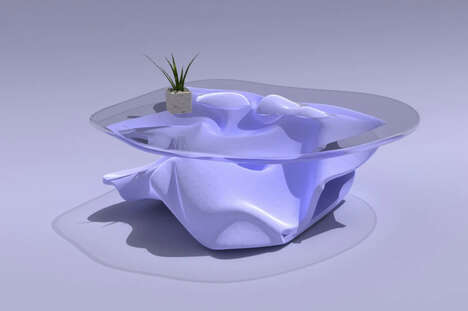
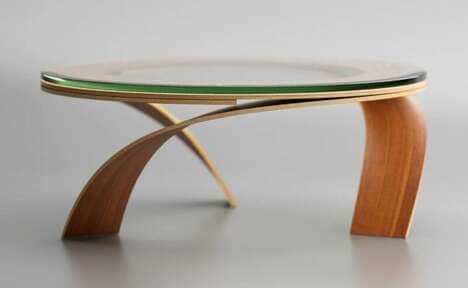
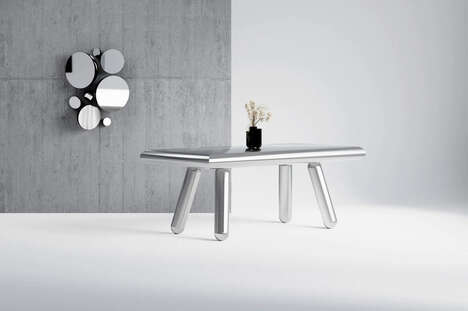
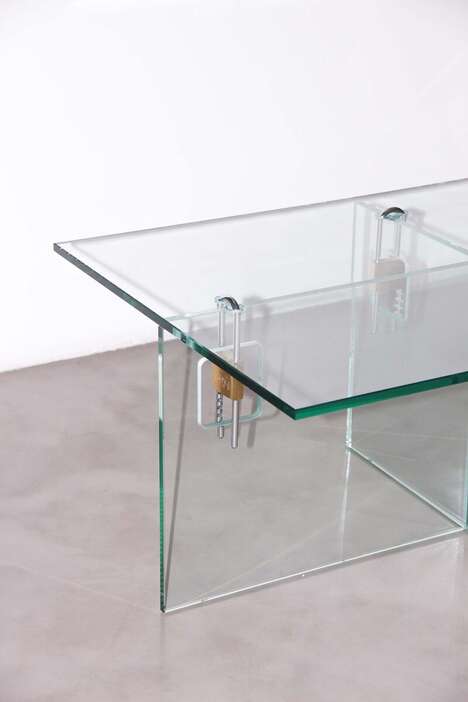
The Fourth Dimension Table is a complicated piece of furniture inspired by the theory of the same name put forth by none-other-than iconic theoretical physicist Albert Einstein. The design is essentially a physical representation of the concept of spacetime, which is the unification of time and space as a four-dimensional continuum, as stated on Wikipedia.
Designed by Axel Yberg of Akke Functional Art, a designer based in New York City, the Fourth Dimension Table looks like something that would have been built in the medieval times. The table is boasts a glass top, a wooden base and four reinforced brackets represent the continuum of spacetime as well as four vectors. The overall result is quiet poetic and mesmerizing.
Why This Trend Is Growing
- Theoretical-physics-inspired Furniture
- There is an opportunity to create furniture designs that are inspired by scientific concepts which can serve as conversation starters and design centerpieces in homes and business settings.
- Dimensional-designs
- Forming 3-dimensional designs and objects are popular. Designers have an opportunity to offer more designs that incorporate the concept of the fourth dimension to bring a unique and artistic touch to decor.
- Fusion of Science and Art
- There is an opportunity for artists and designers to take inspiration from science and create unique works that fuse creativity and scientific concepts.
Industries Being Reshaped
- Furniture and Home Decor
- Furniture and home decor companies can provide unique pieces that incorporate scientific concepts that will appeal to science enthusiasts and also elevate the design aesthetic of living spaces.
- Art and Sculpture
- There is a potential for artists and sculptors to create works that fulfill a desire for art that is both thought-provoking and aesthetically pleasing, as well as serving as a unique statement piece to decorate rooms.
- Exhibitions and Museums
- Exhibitions and museums can showcase designs that intersect science and art, bringing together different disciplines and expanding people's understanding of them.