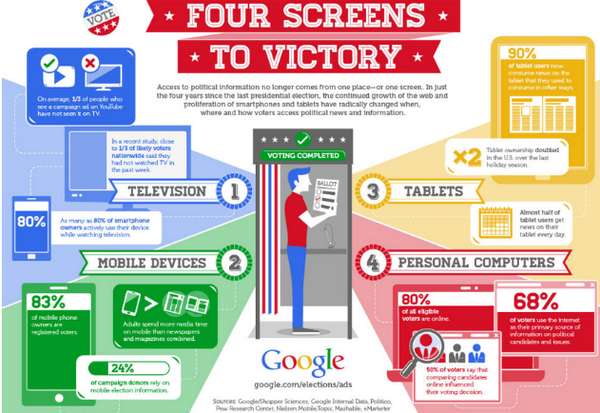
The 'Four Screens to Victory' infographic created by Google examines the nature of modern technology as it interacts with political campaigns. Even since the 2008 election, technology has become increasingly important and plays a different role than it did four years ago.
The 2012 Presidential Election is shaping up to be the most technologically & social media savvy campaign yet. People are watching videos from TV on YouTube from their smartphones, computers or tablets. Ultimately Google is putting it out there that politicians have to play to all these fields to truly maximize their political influence and reach to potential voters. With one third of eligible voters not watching TV on a regular or even weekly basis, and more voters receiving their news from smartphones or tablets, this technological shift is either the downfall or asset of the savvy politician.
What Makes This Trend Stand Out
- Increasing Importance of Technology in Political Campaigns
- Technological advancements have created new opportunities for politicians to reach and influence potential voters.
- Rise of Social Media in Political Campaigns
- Social media platforms like YouTube have become an important channel for political communication and engagement.
- Shift in Voter Behavior Towards Mobile Devices
- More voters are accessing news and information on smartphones and tablets, challenging politicians to adapt their strategies accordingly.
Sectors Adopting This
- Political Campaigns
- Political campaigns need to leverage technology and social media to effectively engage with voters and maximize their reach.
- Digital Media
- Digital media companies can provide platforms and tools for political campaigns to connect with voters online.
- Mobile Technology
- Mobile technology companies can capitalize on the shift in voter behavior towards mobile devices by offering innovative solutions for political campaigns to engage with mobile users.