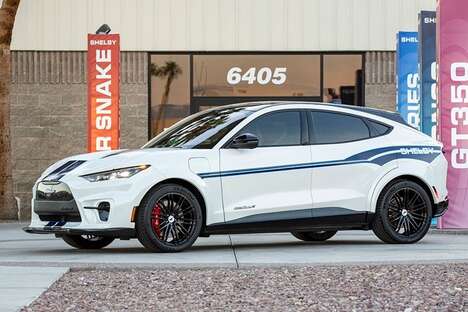
It has been announced that Ford's electric SUV will be showcased on November 17th at the Los Angles Auto Show. The company initially announced the car over a year ago, and Ford stated that design takes inspiration from its own Mustang line. Not much information has been released about the car, however, Ford's electric SUV will have an approximate range of 300 miles, and it will be released in 2020.
Ford views electric cars as the future and the company is slowly transitioning away from fossil-fueled cars. This year the company allocated $11 billion to the development of electric vehicles, specifically the company wanted to create 16 new electrically powered cars. Ford is hoping to have a total of 40 electric cars available to consumers by 2022.
Image Credit: Ford
What Makes This Trend Stand Out
- Electric Suvs
- The rise of electric SUVs presents an opportunity for automakers to tap into the growing market of eco-conscious consumers.
- Muscle Car-inspired Design
- By incorporating muscle car-inspired design elements into electric SUVs, automakers can attract consumers who desire a combination of power and sustainability.
- Transition to Electric Vehicles
- The shift towards electric vehicles signals a disruptive innovation in the automotive industry, creating opportunities for companies to develop new technologies and infrastructure.
Sectors Adopting This
- Automotive
- The automotive industry must adapt to the demand for electric SUVs by investing in electric vehicle technologies and creating charging infrastructure.
- Sustainability
- The rise of electric SUVs aligns with the sustainability movement, creating opportunities for industries focused on renewable energy, battery technology, and sustainable materials.
- Technology
- The development of electric SUVs requires advancements in battery technology, autonomous driving, and connectivity, presenting opportunities for companies in the technology sector.