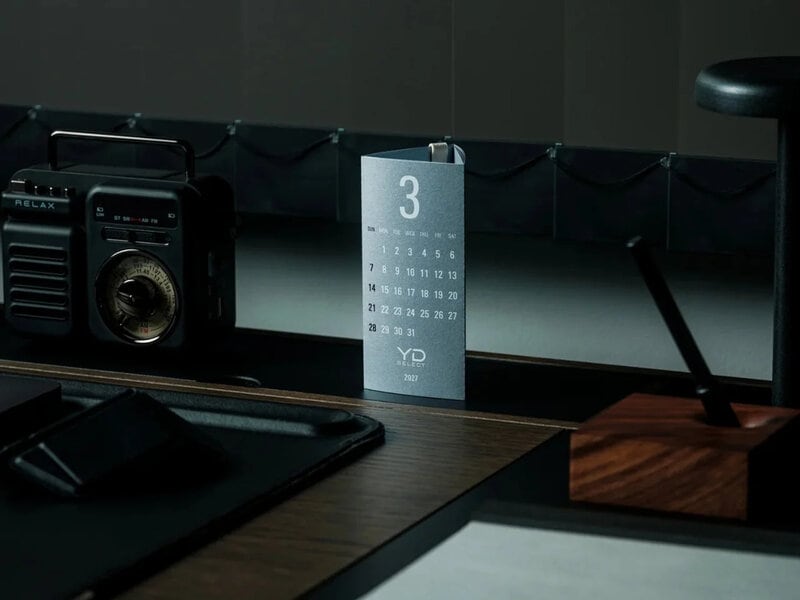
Replug folded a single sheet into a self-standing desk calendar with the ‘TriAngular Calendar 2027,’ giving people working at crowded desks a quick date check without picking up a phone. Three months are printed across its three sides, so a simple turn brings the neighboring month into view.
The structure relies on paper alone, joined by a paper clip rather than a separate base, and the silver stock is hand-silkscreened in Japan. It stands 4.9 inches tall with a 2.4-inch width and 2.1-inch depth, keeping it compact. Perforated months tear away, and it includes January and February 2028 for early planning.
Replug shows how a $20 price can make the calendar sell the object as much as the function, giving stationery buyers a narrow reference instead of another wide desk item, while the folded-paper build uses the printed sheet as both surface and stand.
Image Credit: Yanko Design
What's Driving This Trend
- Folded-paper Utility
- Single-sheet construction creates room for compact, low-material desk products that merge structure, display, and function into one affordable object.
- Analog Desk Focus
- Phone-free reference tools support productivity environments where workers value glanceable information without digital distraction or added screen time.
- Compact Object Design
- Space-saving formats reveal demand for functional accessories that fit crowded workstations while still offering distinctive visual appeal.
Who This Affects Most
- Stationery
- Premium paper goods can differentiate through sculptural formats, tactile finishes, and collectible design qualities beyond basic office utility.
- Office Supplies
- Small-footprint planning tools present opportunities for rethinking everyday workplace items as efficient, decorative, and low-cost productivity aids.
- Paper Manufacturing
- Material-led product innovation highlights how specialty stocks, perforation, and print techniques can turn flat sheets into self-supporting consumer goods.