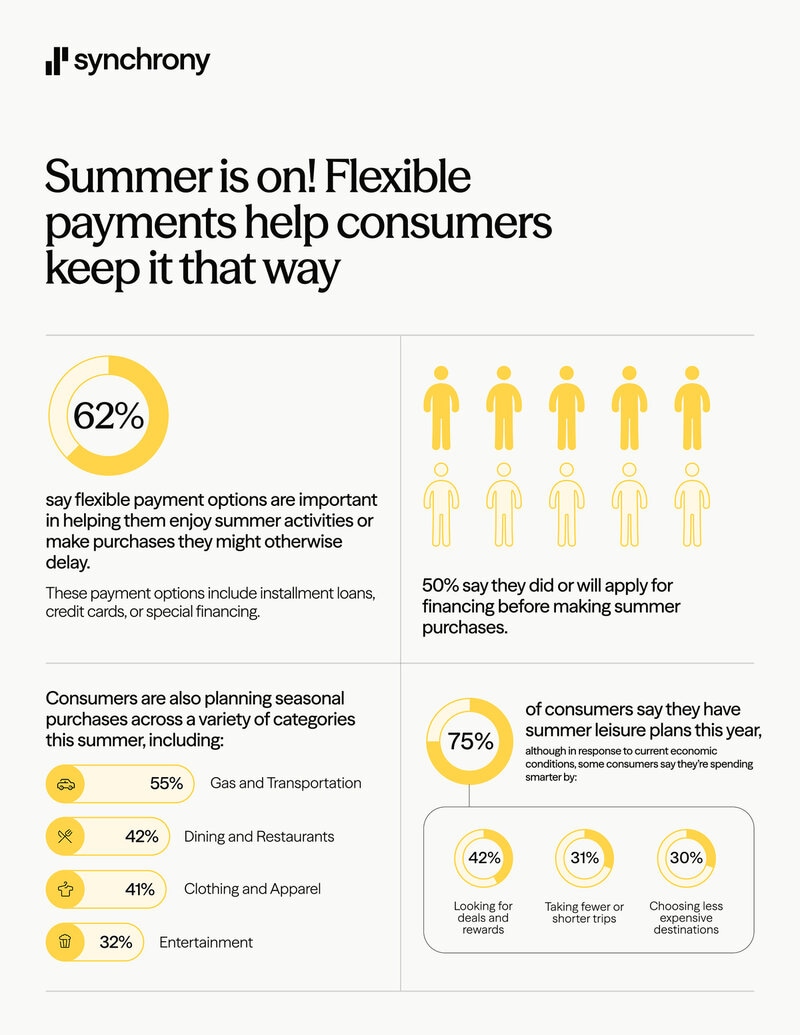
Synchrony, a prominent consumer financing company, has released a new flexible payment survey from its In Sync with Consumers research. The findings illuminate how flexible payment mechanisms are playing a pivotal role in enabling summer-related expenditures, with six out of ten respondents indicating that such options are crucial for affording seasonal activities and purchases that might otherwise be postponed.
Synchrony's flexible payment survey data reveals that half of all consumers have either already applied for or intend to seek financing prior to making summer leisure acquisitions. This points to a proactive approach to managing household budgets while still partaking in travel, dining, clothing, entertainment, and home improvement projects. This trend is particularly pronounced among low- and middle-income households, who value the ability to distribute costs over time, though high-earners also show strong interest in rewards programs.
Image Credit: Synchrony
Key Themes Behind This Trend
- Seasonal Payment Planning
- Flexible financing is reshaping summer spending by allowing consumers to distribute travel, dining, apparel, and entertainment costs across longer budgeting periods.
- Income-tiered Financing
- Payment providers can differentiate offerings around low- and middle-income affordability needs while incorporating rewards-driven features for higher-income consumers.
- Leisure Purchase Deferral
- The risk of postponed seasonal purchases highlights market potential for embedded credit tools that keep discretionary spending accessible during peak demand periods.
Where This Applies
- Consumer Finance
- Survey-backed payment insights create space for lenders and fintechs to design flexible products aligned with seasonal household cash flow patterns.
- Travel and Hospitality
- Vacation providers, restaurants, and entertainment venues are positioned to benefit from checkout financing that reduces upfront cost barriers for summer experiences.
- Retail and Home Improvement
- Clothing stores and home project retailers gain new relevance when installment options support larger seasonal baskets without immediate full-payment pressure.