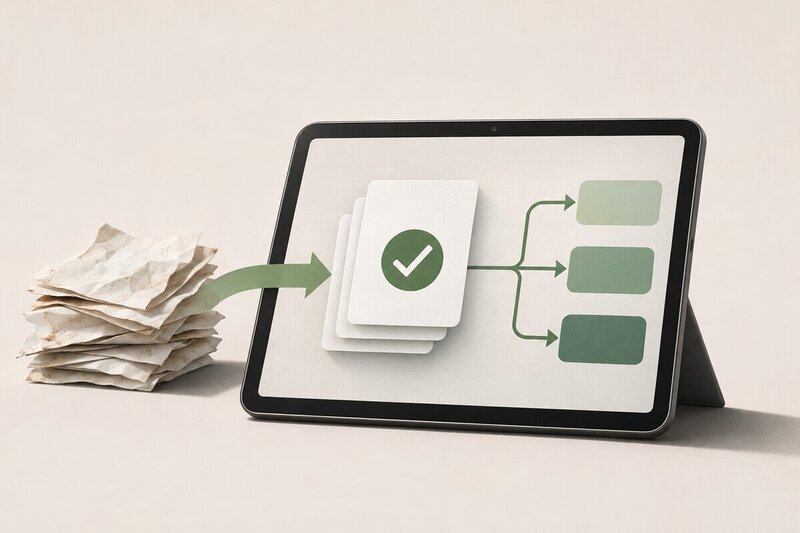
OmniByte expanded field operations software with ‘VERTEX,’ an AI-driven execution platform for construction, manufacturing, energy and utilities, and field service teams. Built on ‘FormsPro,’ it combines digital forms, AI agents and workflow automation to turn frontline inputs into verified operational records.
Users can create forms from natural-language prompts or existing documents, while AI agents flag unusual entries before submission. ‘VERTEX’ also keeps data capture running when crews lose signal, which suits safety, compliance and asset records in the field. Global enterprise availability starts in December 2026, after more than a decade of field work across more than 100 countries.
OmniByte shows how offline processing and workflow triggers such as work orders or invoices can turn mobile data collection into an operations control layer for enterprise teams, giving buyers a defined December 2026 window to replace manual cleanup with ERP-ready inputs.
Image Credit: AI-generated
Why This Trend Is Growing
- Verified Field Data
- AI validation embedded into mobile forms creates opportunities for enterprises to convert frontline observations into trusted compliance, safety, and asset records.
- Offline Workflow Automation
- Signal-independent data capture supports new operational models where remote crews can trigger work orders, invoices, and approvals without waiting for connectivity.
- Natural-language Form Creation
- Prompt-based form building lowers the barrier for nontechnical teams to digitize field processes and standardize data collection across complex operations.
Industries Being Reshaped
- Construction Technology
- Jobsite teams benefit from AI-checked records that reduce manual reconciliation and improve visibility across safety, inspections, and project execution.
- Energy and Utilities
- Distributed infrastructure operations gain value from offline-ready field tools that maintain reliable asset and compliance documentation in remote environments.
- Manufacturing Operations
- Factory and service environments can use automated workflows to connect frontline inputs with ERP systems, quality processes, and maintenance records.