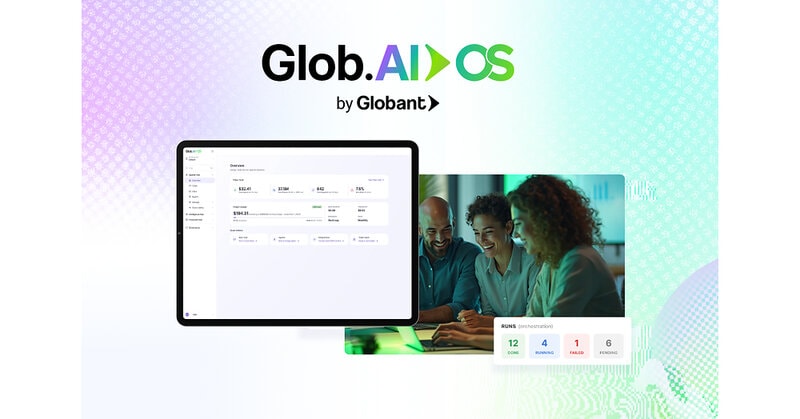
Globant is introducing unified enterprise AI operating systems through Glob.AI OS, a platform that brings AI models, autonomous agents, and business data into one managed environment. Rather than requiring companies to oversee separate AI tools, the system coordinates their activities while maintaining security controls, spending visibility, and access permissions.
The platform connects more than 320 AI models from over 25 providers, automatically directing tasks toward cost-efficient options. Its four management hubs support corporate data integration, agent testing, workflow supervision, and usage tracking. Glob.AI OS also works with human-supervised AI Pods that handle software development, modernization, and other operational projects.
For Globant, the expansion supports a services model where businesses pay for outcomes or consumption instead of traditional staffing arrangements. Existing AI Pod deployments have helped FIFA improve throughput efficiency by 20% and YPF shorten contract timelines by up to 40%.
Image Credit: Globant
What Makes This Trend Stand Out
- Unified AI Orchestration
- Centralized platforms that coordinate models, agents, and enterprise data create room for software layers that replace fragmented AI tool management with governed operational control.
- Outcome-based AI Services
- Pricing models tied to consumption or business results signal a shift toward service ecosystems where vendors compete on measurable efficiency gains rather than staffing volume.
- Governed Agent Workflows
- Human-supervised autonomous agents introduce new possibilities for regulated workflow automation across software development, contract processing, and enterprise operations.
Sectors Adopting This
- Enterprise Software
- AI operating systems expand the enterprise software market by adding governance, cost routing, and multi-model coordination as core infrastructure features.
- IT Services
- Managed AI Pods reshape IT services by blending automation with expert oversight for modernization, development, and operational delivery.
- Business Process Outsourcing
- AI-enabled workflow supervision creates disruption in outsourcing by compressing timelines and linking provider value to productivity improvements.