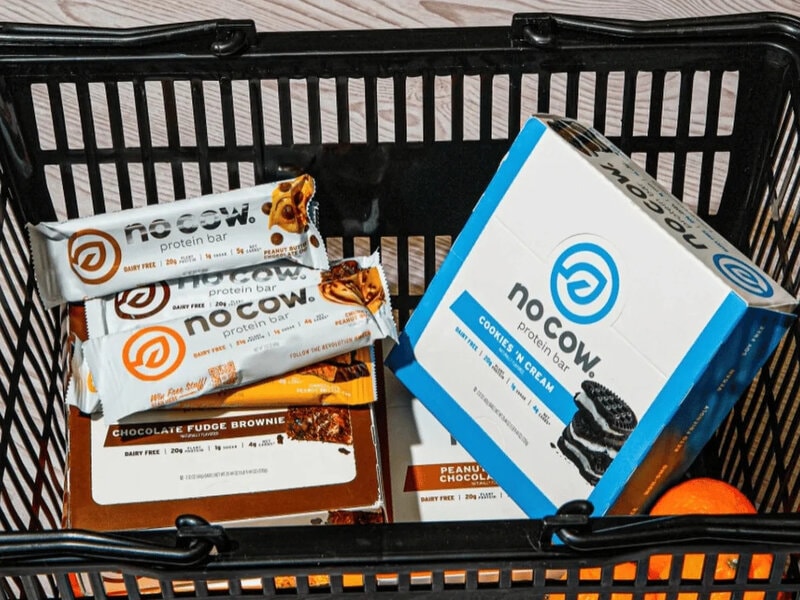
No Cow reformulated its plant-based protein bars in the US, giving protein-focused Americans a softer bite and a pitch built around fiber and low sugar as much as protein. The Denver brand is recasting its vegan bars for people who want satiety without whey or dairy.
The bars still rely on pea and brown rice protein, a pairing that covers all nine essential amino acids. Each bar contains 14-17g of fiber, making it a more filling snack instead of a straight workout add-on, and it keeps at least 20g of protein so the added fiber does not displace the category's main draw.
The fiber-first recipe shift moves No Cow beyond the old chalky-bar stereotype and into a category conversation shaped by fuller, lower-sugar snacks. Smoother texture and satiety give the brand a sharper way to compete in plant-based bars, where taste and nutrition now have to land together.
Image Credit: No Cow
What Makes This Trend Stand Out
- Fiber-forward Snacking
- High-fiber formulations are reshaping protein snacks into satiety-driven options that compete beyond fitness occasions and appeal to everyday appetite management.
- Plant-based Protein Refinement
- Improved texture and complete amino acid positioning give dairy-free protein products stronger mainstream relevance as consumers expect better taste with functional nutrition.
- Low-sugar Functional Bars
- Reduced-sugar recipes paired with protein and fiber reflect a shift toward multi-benefit bars that serve wellness-minded consumers seeking balanced indulgence.
Sectors Adopting This
- Functional Foods
- The convergence of fiber, protein, and low sugar creates space for differentiated snacks that deliver measurable nutrition benefits in convenient formats.
- Plant-based Foods
- Vegan protein innovation is expanding from ingredient substitution to sensory quality and fullness, strengthening its role in broader health-focused eating habits.
- Sports Nutrition
- Protein bar brands are broadening performance-led products into everyday wellness snacks, opening new demand among consumers who value satiety as much as muscle support.