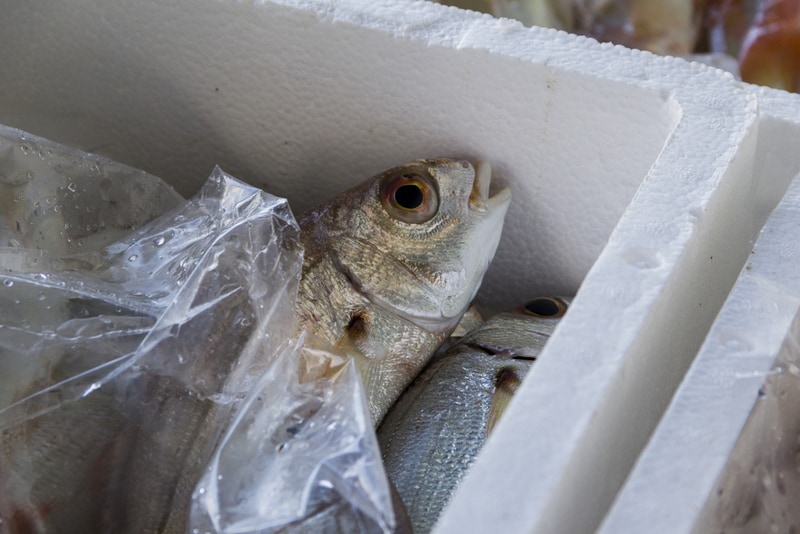
PAPACKS introduced the 'Fiber Box,' a moulded fibre transport container designed for moving seafood, featuring a composition of virgin wood fibres and industrial hemp that delivers durability while remaining recyclable. The container is nestable to save space in transit and was developed to withstand the moisture and handling demands of fish and shellfish logistics.
Fiber Box’s moulded construction aims to replace single-use plastics and foam with a paper-based alternative; PAPACKS engineered the geometry and material blend to balance strength, moisture resistance and end-of-life recyclability. For seafood suppliers and distributors, the Fiber Box promises a lower-impact shipping option that integrates with existing recycling streams, reduces reliance on fossil-fuel plastics and supports broader trends toward circular, fiber-based packaging in cold-chain operations.
Image Credit: xavitgn / Shutterstock
Key Themes Behind This Trend
- Fiber-based Cold-chain Packaging
- A shift to paper- and fibre-based containers tailored for refrigerated supply chains creates potential to displace foam and plastic in perishable logistics through recyclable, moisture-resistant designs.
- Hemp-enhanced Moulded Fibre
- Incorporating industrial hemp fibers into moulded pulp enables new material blends that combine improved tensile strength and moisture tolerance with lower embodied fossil-carbon than synthetic alternatives.
- Nestable Recyclable Transport Containers
- Space-saving, nestable geometries that preserve recyclability introduce opportunities for packaging systems that reduce return logistics costs and warehouse footprint while maintaining cold-chain performance.
Where This Applies
- Seafood Logistics
- Suppliers and distributors of fish and shellfish face demand for packaging that tolerates wet handling and temperature swings while enabling integration into municipal recycling streams.
- Sustainable Packaging Manufacturing
- Producers of moulded fibre goods can explore new product lines using hemp and virgin wood fibre to meet brand and regulatory pressures for low-carbon, end-of-life-friendly packaging.
- Cold-chain Refrigerated Transport
- Operators of refrigerated trucking and consolidation centers could benefit from lightweight, nestable containers that change loading density and compatibility with existing palletized workflows.