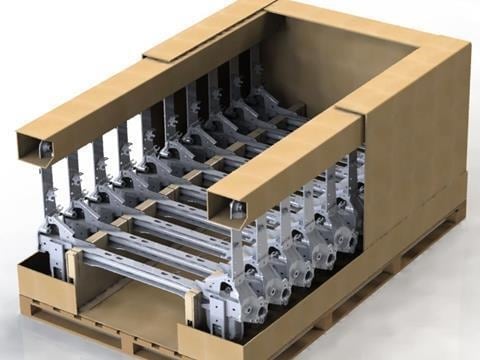
DS Smith Tecnicarton introduced a fibre-based chassis packaging solution for the Iberian automotive suppliers sector, featuring a mono-material design intended to replace metallic reusable systems. The launch presented a protective pack engineered to secure automotive chassis components in transit while prioritizing recyclability and simplified end-of-life handling.
The solution’s design emphasizes structural strength from moulded fibre elements and compatibility with standard logistics flows; DS Smith positioned the product as an alternative to heavier metal crates. For suppliers and OEMs this mattered because the pack reduced reliance on returnable metal containers and lowered transport weight, supporting circular packaging goals and cost efficiencies. The fibre chassis pack aligned with growing industry demand for single-material, recyclable formats that simplify recycling streams and cut embodied carbon in supply chains.
Image Credit: DS Smith Technicarton
What's Driving This Trend
- Mono-material Automotive Packaging
- A shift to single-material chassis packs simplifies recycling streams and lowers embodied carbon in supply chains, enabling more circular logistics models.
- Moulded Fibre Structural Components
- Emerging moulded fibre elements provide structural strength comparable to metal, presenting lighter-weight alternatives for protective transport solutions.
- Lightweight Metal-replacement Systems
- Growing preference for lighter pack formats reduces transport emissions and decreases dependence on returnable metal containers within OEM supplier networks.
Who This Affects Most
- Automotive Supply Chain
- Suppliers and OEMs face opportunities to redesign inbound logistics around recyclable, lighter packaging that impacts total cost and carbon accounting.
- Packaging Manufacturing
- Producers of fibre-based packs can expand into structural packaging segments previously dominated by metal crates, altering material sourcing and production lines.
- Recycling and Materials Recovery
- Simplified mono-material formats streamline sorting and end-of-life processing, changing the economics and throughput of material recovery facilities.