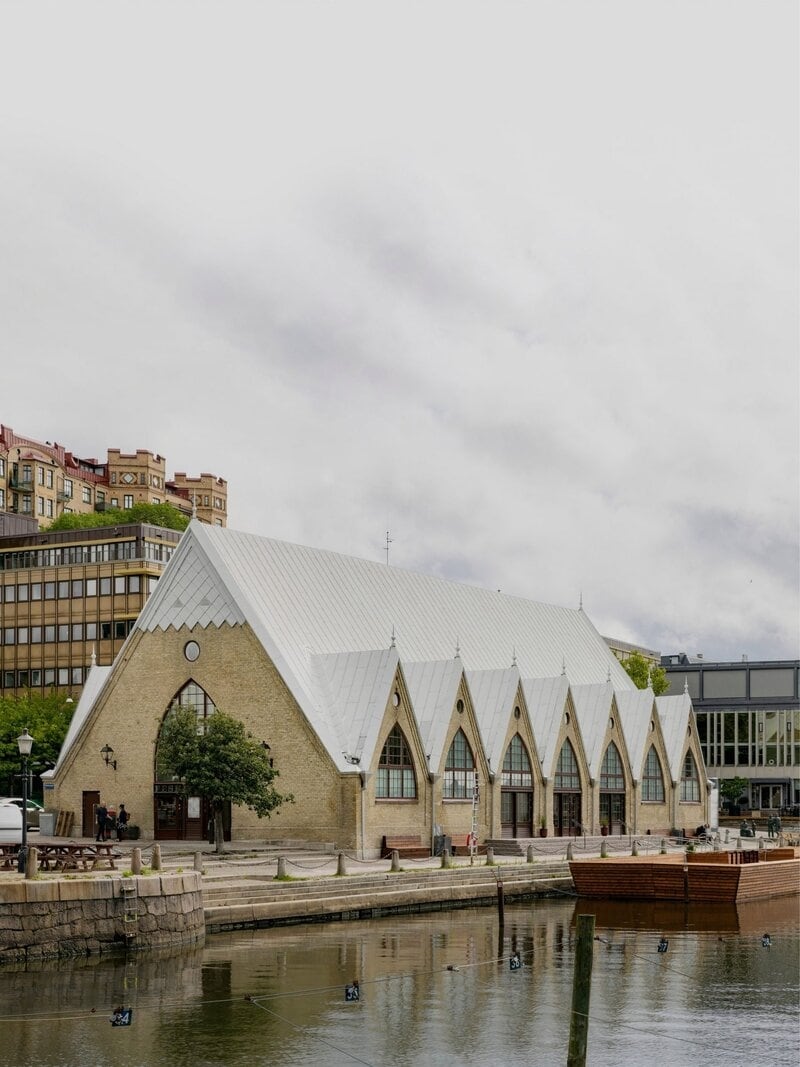
The Feskekôrka by White Arkitekter revives Gothenburg’s historic fish market through a restoration that balances preservation with modernization. Originally built in 1874, the neo-Gothic hall was carefully deconstructed to expose its timber-framed structure and reconnect it with the adjacent canal. Layers of outdated concrete and utilities were removed, while a new subterranean level now houses technical systems to free the main hall for open, light-filled use.
Traditional Swedish pine rafters and cast-iron fittings were repaired or replaced using period joinery methods, maintaining authenticity while improving longevity. Contemporary kitchen stations, tiled surfaces, and expanded public areas reinterpret the building’s industrial heritage for modern functionality. The project reestablishes Feskekôrka as both a cultural landmark and a working marketplace, preserving its maritime identity while adapting it to the social and architectural needs of 21st-century Gothenburg.
Image Credit: Kalle Sanner
Why This Trend Is Growing
- Heritage Restoration
- Restoration projects that balance historical preservation with modernization are gaining traction, highlighting opportunities for innovative construction techniques and materials that honor tradition while enhancing functionality.
- Modern Market Halls
- The reinvention of traditional market halls into multifunctional spaces reflects a trend towards adaptive reuse in urban architecture, promoting a fusion of heritage aesthetics with today's commercial needs.
- Sustainable Architecture
- Projects that incorporate sustainable design elements and resource-efficient utilities while preserving cultural landmarks are driving a trend towards environmentally conscious urban development.
Industries Being Reshaped
- Architectural Restoration
- The architectural restoration industry is experiencing innovation with methods that carefully integrate new technologies into historic structures to prolong their usability and relevance.
- Urban Redevelopment
- Urban redevelopment focused on preserving historic sites while integrating modern amenities is shaping new city landscapes, providing fresh business models that combine culture and commerce.
- Sustainable Construction
- The sustainable construction sector is evolving by adopting eco-friendly practices that support both the conservation of historical architecture and the incorporation of modern energy solutions.