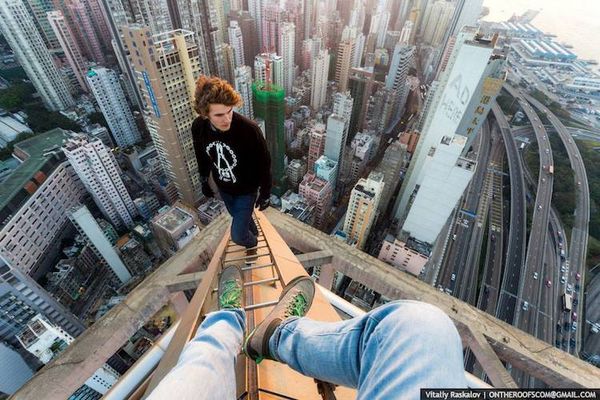
Using paint to simulate dizzying heights, Fabio Giampietro created a series of paintings called 'Vertigo.' Each of the paintings warp your perspective from the top of a skyscraper in a large metropolis. The pictures makes sure that you can see your fate upon falling by highlighting the little slabs of concrete at the bottom. Combined with the drab color pallet of the paintings, all of these factors contribute to a sense of vertigo when looking at the art.
From the viewer's perspective, Giampietro's paintings warps away to increase the feeling that you're free-falling. In addition, vertical lines extending from the ground of the painting augments the sense that you're in danger. Giampietro goes a step further and adds little ant-sized people to populate the streets in order to give his paintings a final touch of realism.
Key Themes Behind This Trend
- Dizzying Art
- Creating art that simulates a sense of vertigo or disorientation can be a unique way for artists to stand out and offer experiences for viewers that go beyond traditional painting.
- Realistic Imagery
- Artists can use techniques like adding small details, using drab colors, and augmenting images to create a sense of realism and immersion for viewers.
- Heightened Perceptions
- Art that challenges or alters viewers' perspectives has the potential to create powerful emotional and psychological responses.
Where This Applies
- Art and Design
- There is opportunity for artists and designers to experiment with techniques and push the boundaries of traditional art forms to create unique and immersive experiences for viewers.
- Entertainment
- Media and entertainment companies could incorporate similar techniques into their content to create immersive experiences in film, television, or virtual reality.
- Tourism and Hospitality
- Hotels or attractions could incorporate dizzying artwork or experiences as a draw for adventurous or thrill-seeking guests.