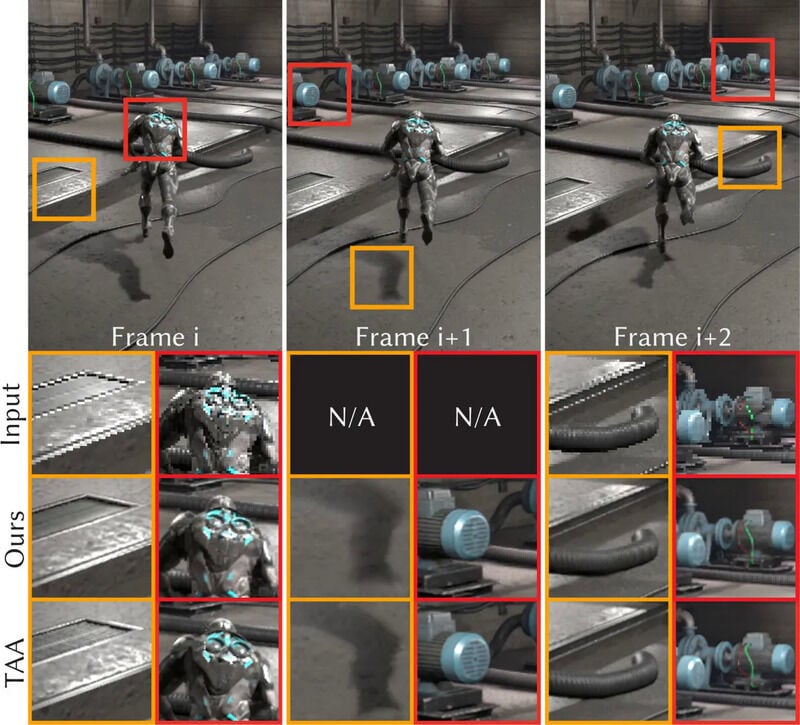
Intel is testing a new frame generation feature titled 'ExtraSS' for its ARC-branded discrete and integrated GPUs. ExtraSS, which is a short form for Extrapolation Super Sampling, is essentially a sequel to Intel's XeSS, and it will generate future frames by extrapolating information from the current frame. It is important to note that ExtraSS generates a frame based entirely on the previous frame and the current action of the player in a video game, rather than NVIDIA's DLSS or AMD's FSR, which both use interpolation, generating a frame in between two rendered ones.
As such, Intel acknowledges that ExtraSS may produce more artifacts than its competitors, but it will require a lower GPU workload and, in theory, should offer vastly improved framerates given its reliance on a single frame. This feature should place Intel more inline with other chip manufacturers such as NVIDIA, AMD, or even Apple with its Metal upscaling.
Image Credit: Intel
Why This Trend Is Growing
- Extrapolation-based Frame Generation
- Intel is testing 'ExtraSS', a new frame generation feature that extrapolates information from the current frame to generate future frames.
- Sequel to Xess
- ExtraSS is Intel's sequel to XeSS and offers a different approach by generating frames based on the previous frame and the current action of the player.
- Improved Framerates
- ExtraSS has the potential to offer vastly improved framerates by relying on a single frame and resulting in a lower GPU workload.
Industries Being Reshaped
- Video Game Hardware
- Extrapolation-based frame generation can disrupt the video game hardware industry by offering a new feature that could improve framerates and reduce GPU workload.
- Computer Graphics
- The computer graphics industry could be impacted by the development of ExtraSS, as it offers a different method of frame generation compared to existing interpolation-based techniques.
- Chip Manufacturing
- Intel's ExtraSS feature could disrupt the chip manufacturing industry by making Intel's GPUs more competitive with other manufacturers like NVIDIA, AMD, and Apple.