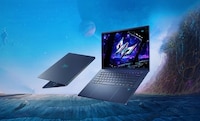

Intel’s new Panther Lake processors, officially branded as Core Ultra Series 3, are the company’s latest laptop chips aimed at thin-and-light Windows notebooks. Tested in an MSI Prestige 14 Flip and a Lenovo 16-inch reference laptop, the X7 358H and X9 388H models stood out for combining long battery life with substantial performance gains over previous Intel generations. The main differentiator is their strong integrated graphics and multi-core capabilities in form factors not marketed as gaming devices.
Both chips feature 16 CPU cores with a mix of performance, efficiency, and low-power efficiency cores, paired with a B390 integrated GPU that uses 12 Xe cores. Benchmark results showed major jumps in multi-core processing and graphics performance compared to prior Lunar Lake-based systems, while battery life on a powerful configuration reached up to 22 hours. Intel’s XeSS upscaling and frame generation support help these systems reach smooth frame rates in modern games, even on slim designs.
For consumers, this means mainstream Windows laptops can now handle more demanding creative work, gaming, and AI-related tasks without relying on a discrete graphics card. The balance of strong graphics and extended battery life positions Intel-powered ultrabooks as more capable all-rounders, narrowing the gap with high-performance devices like Apple’s MacBook line. As more manufacturers adopt Core Ultra Series 3, shoppers can expect a wider selection of portable laptops that deliver desktop-like power in everyday use.
Image Credit: Intel
What's Driving This Trend
- Improved Integrated Graphics
- The development of powerful integrated GPUs in Intel's Core Ultra Series 3 minimizes the reliance on discrete graphics cards, marking a shift in the laptop industry's approach to balancing power and efficiency.
- Extended Battery Life in High-performance Laptops
- Laptops equipped with Intel's new processors can achieve extended battery life of up to 22 hours, redefining user expectations for mobile computing endurance without compromising on performance.
- Ultra-slim High-performance Notebooks
- The ability of Intel's Panther Lake chips to fit into thin-and-light designs without sacrificing processing power showcases a new direction for ultra-portable computing.
Who This Affects Most
- Laptop Manufacturing
- Intel’s Panther Lake processors enable manufacturers to build laptops that deliver high performance in slimmer, more versatile form factors.
- Computer Graphics
- The advancements in integrated B390 GPU technology signal transformative changes in graphics capabilities for non-gaming laptops.
- Mobile Computing
- An evolution in battery efficiency tied to high-performance processing marks a significant turn for the mobile computing industry, offering unprecedented portability.