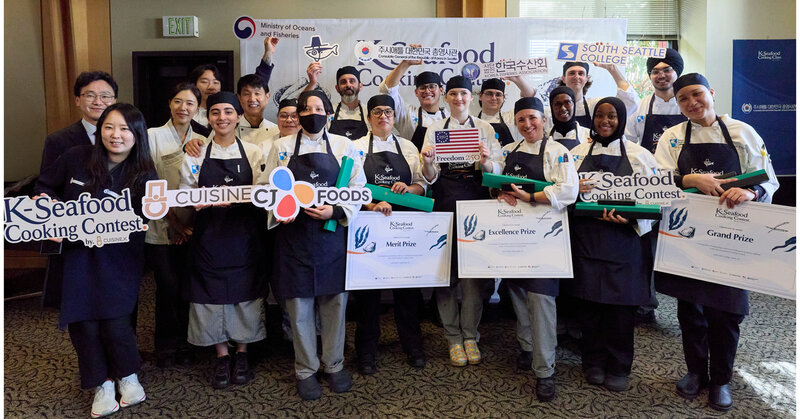
Experiential Korean cooking programs are introducing international audiences to traditional seafood ingredients through interactive culinary education. CJ Foods' Cuisine.K platform partnered with the Korea Fisheries Association to host cooking classes and a student competition in Seattle, helping participants explore practical ways to incorporate Korean seafood into everyday meals.
Held at South Seattle College from November 5 to 7, the program featured chef-led demonstrations and hands-on workshops. Cuisine.K alumna Chef Yeon-ju Lee introduced oysters, seaweed, and anchovies through dishes including Soy-Braised Oyster Rice Bowl, Gim Pancake, and Oyster Mini Gimbap. Students also created original recipes during a culinary competition.
For CJ Foods and the Korea Fisheries Association, these activities could strengthen international awareness of Korean seafood and encourage greater consumer demand. The program also provides exposure for emerging culinary talent while helping Korean food businesses connect with new audiences through accessible cooking experiences.
Image Credit: CJ Foods
What's Driving This Trend
- Experiential Cuisine Education
- Hands-on cooking programs are turning cultural food discovery into immersive learning formats that can expand consumer familiarity with niche ingredients.
- Global Seafood Localization
- Traditional Korean seafood is being adapted into everyday meals for international audiences, creating room for ingredient brands to build relevance beyond ethnic grocery channels.
- Culinary Talent Showcases
- Student recipe competitions are blending education and product exposure, giving food companies a pathway to surface emerging chefs while testing new menu applications.
Who This Affects Most
- Food and Beverage
- Interactive culinary platforms can help packaged food and ingredient brands translate unfamiliar products into approachable meal occasions.
- Culinary Education
- Colleges and cooking schools are becoming experiential marketing venues where cultural food organizations can connect instruction, creativity, and product sampling.
- Seafood
- Export-focused seafood producers can use recipe-led education to reposition traditional ingredients as versatile staples for global home cooking.