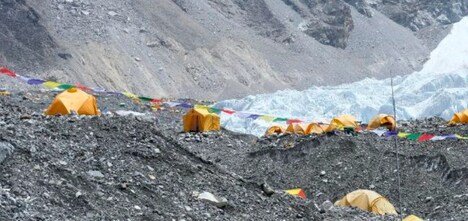
National Geographic and Rolex recently joined forces to launch the 'Everest AR Experience,' an interactive AR feature on Instagram that will virtually allow users to climb Mt. Everest. The virtual experience was launched in order to celebrate the July issue of National Geographic magazine that focuses solely on the mountain.
The Everest AR Experience allows users to shift between different 360° views at various locations on the mountain. Users will be donning modern-day climbing gear with the opportunity to take and share selfies throughout the trip.
The virtual climb also boasts a Spark AR feature to enables multiple AR filters to be combined. On the user's end, it only displays one AR filter, but National Geographic is able to "create one of the highest fidelity Spark AR experiences yet."
In addition, users can see virtual scientists collection samples of ice core and installing the world’s highest weather station — both real accomplishments that took place in 2019 that help provide vital new insights on the effects of climate change on high mountains.
What Makes This Trend Stand Out
- Virtual AR Experiences
- There is an opportunity for companies to create more engaging and interactive virtual experiences for customers using AR technology.
- Social Media Marketing with AR
- Businesses can use AR filters and other features on social media to help promote their products and services and engage with customers in a unique way.
- Science and Education Through AR
- Companies can leverage AR technology to provide users with virtual experiences that help educate and inform about real-world scientific achievements and discoveries.
Sectors Adopting This
- Travel and Tourism
- The use of AR technology can provide travelers with a virtual experience of travel destinations, allowing them to preview and plan trips in a more immersive way.
- Advertising and Marketing
- Businesses can use AR technology to create unique and engaging advertising campaigns that allow customers to interact with their products or services in a more personal way.
- Science and Research
- AR technology can be used to create virtual experiences for scientists and researchers to collect data and perform experiments in a more interactive way.