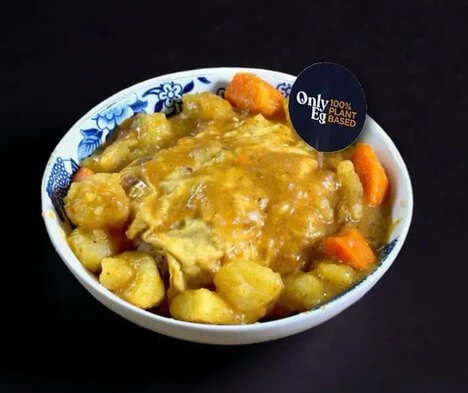
Anne Larkins is a graduate from London's Central Saint Martins and she challenges ethical food production by offering up a plant-based egg alternative.
The product has somewhat of an odd shape and the project is entitled 'An Egg Without a Chicken.' The conceptual endeavor explores material use and searches for liberation from biological capabilities — in this case, it is the necessity of a hen to produce an egg.
The egg alternative was presented during Dutch Design Week — October 19th to October 27th. The central ingredient of Anne Larkins' plant-based product is pea protein isolate. To supplement taste gaps, the designer applied Kala Namak salt, as well as alginate, which is an acid derived from algae. In addition to sharing the flavor of its inspiration, the egg alternative also replicates the nutritional values.
Photo Credits: Tom Mannion
What Makes This Trend Stand Out
- Plant-based Food
- The trend of plant-based food products is disrupting the food industry by offering alternatives to traditional animal-based products.
- Egg Substitutes
- The growing demand for egg substitutes is creating opportunities for innovative products that replicate the taste and nutritional value of eggs.
- Sustainable Packaging
- The use of innovative packaging materials and designs that align with the sustainability of plant-based products is a trend in the packaging industry.
Sectors Adopting This
- Food Technology
- The food technology industry has the opportunity to develop new plant-based egg alternatives that cater to consumers' dietary preferences.
- Sustainable Fashion
- The sustainable fashion industry can explore the use of plant-based materials, like pea protein and algae-derived substances, to create eco-friendly textile products.
- Packaging Industry
- The packaging industry can capitalize on the trend of plant-based food products by designing sustainable and visually appealing packaging solutions for these alternatives.