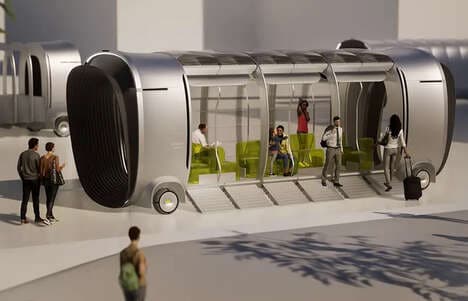
British designer Tiffany Roddis's 'Ecoshel' is a futuristic eco-friendly bus stop aimed to reduce the impact of carbon emissions from buses. Ecoshel integrates solar cells, an electric generator, pressure pads and even recyclable materials, which not only produce electricity but also minimize our carbon footprint.
Ecoshel is quite hi-tech, as it features an easy-read route finder and GPS signals to provide travel information and guidance to passengers.
Implications - With eco-consciousness growing rapidly across the globe, products that have been around for a long time are going green. Bus stations, automobiles, and even cellphones are getting eco makeovers to appeal to the consumer drive towards green living.
What's Driving This Trend
- Eco-friendly Transportation
- Designing eco-friendly bus stops and integrating sustainable features in public transportation infrastructure presents disruptive innovation opportunities.
- Smart Public Transportation
- Incorporating advanced technology, such as GPS signals and route finders, in bus stops and public transportation systems creates opportunities for disruptive innovations in the industry.
- Green Consumer Products
- The increasing demand for environmentally friendly products creates disruptive innovation opportunities in diverse industries, including bus stations, automobiles, and cellphones.
Who This Affects Most
- Transportation
- The transportation industry can benefit from incorporating eco-friendly features and smart technology in bus stops and public transportation systems.
- Urban Infrastructure
- The development of sustainable and futuristic bus stops impacts the urban infrastructure industry, creating opportunities for disruptive innovations.
- Consumer Electronics
- The trend of making consumer electronics, such as cellphones, more eco-friendly presents disruptive innovation opportunities for the industry.