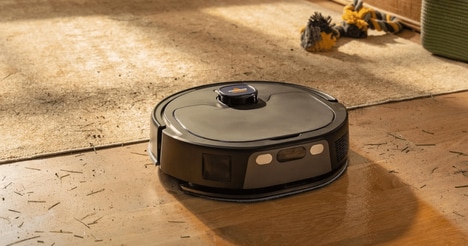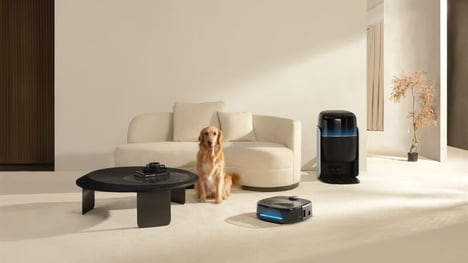
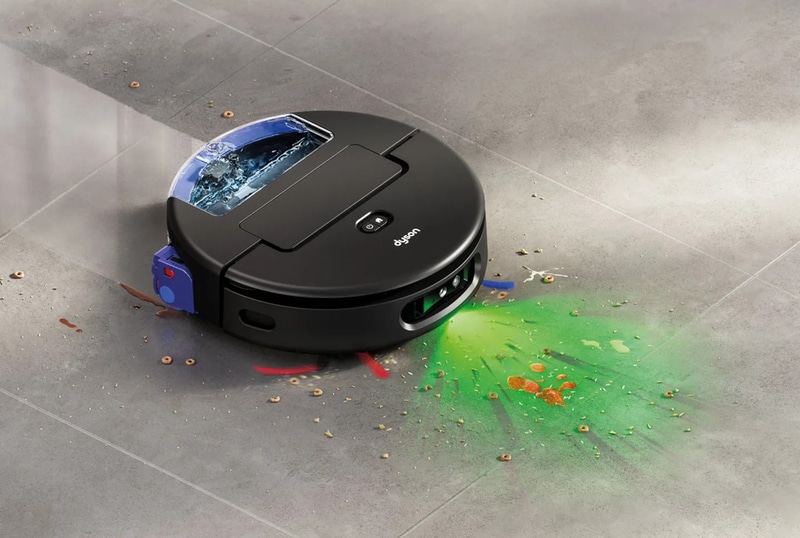
The Dyson Spot+Scrub™ Ai robot vacuum cleaner has been created by the brand with advanced cleaning technologies in mind to help harness the power of artificial intelligence (AI) for hygienically clean surfaces.
The robot uses visual AI technology to detect nearly 200 stains and objects to effectively clean with its built-in self-cleaning wet roller. The system can adapt seamlessly between wet and dry cleaning, and also features four-times suction boost on carpeting to maximize debris capture.
The Dyson Spot+Scrub™ Ai robot vacuum cleaner has green laser technology that's easy on the eyes and will identify stains and dust before providing confirmation that surfaces have been cleaned after the fact. The system makes use of high-speed LiDAR to maximize mapping capabilities and navigation, while also ensuring all areas are effectively cleaned.
Image Credit: Dyson
Key Themes Behind This Trend
- Visual AI Surface Detection
- Robotic systems that combine computer vision and stain libraries are enabling machines to distinguish between nearly 200 stain types and tailor cleaning modalities accordingly, creating opportunities for intelligence-driven maintenance solutions.
- Hybrid Wet Dry Cleaning
- Devices that seamlessly transition between wet and dry cleaning modes while incorporating self-cleaning rollers are redefining expectations for single-platform hygiene performance across diverse surface types.
- Sensor Fusion Navigation
- The integration of green-safe lasers with high-speed LiDAR and other sensors increases mapping fidelity and obstacle recognition, supporting more reliable autonomous coverage and verification of task completion.
Where This Applies
- Home Appliance Manufacturing
- Manufacturers that embed advanced AI vision, adaptive suction, and self-cleaning mechanics into compact form factors may shift consumer preferences toward smarter, higher-margin appliances.
- Commercial Cleaning Services
- Service providers able to deploy autonomous platforms with stain-specific detection and wet/dry capabilities could offer verifiable cleanliness standards and new billing models tied to measurable outcomes.
- Facility Management Software
- Software platforms that ingest mapping, sensor, and cleanliness-confirmation data from autonomous cleaners can enable predictive maintenance, compliance reporting, and optimization of cleaning schedules.