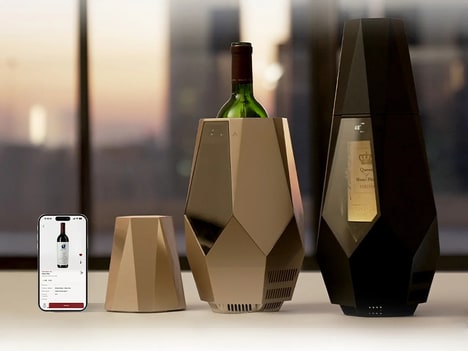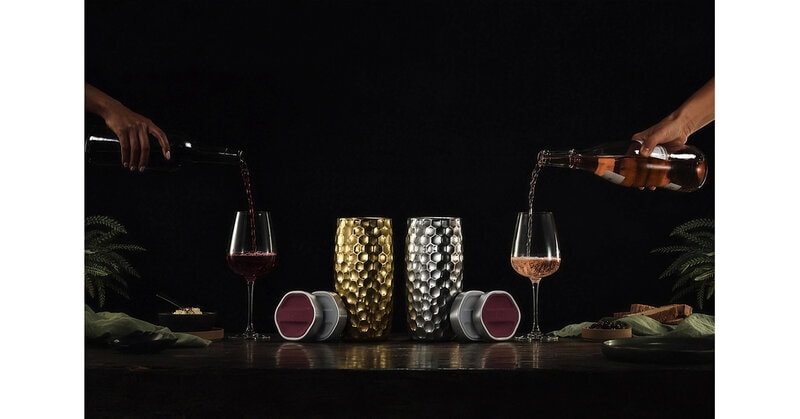
HexClad introduced the ‘Wine Chiller,’ a vessel that uses a dual-puck system to keep red and white bottles at different serving temperatures. Two interchangeable ‘Stay-Cool Pucks,’ built with phase-change material, hold white wine at about 45°F and red wine at about 60°F.
The chiller comes in ‘Mirror Chrome’ and ‘Gold,’ with a sculptural hex-faceted body and double-wall vacuum insulation. It is designed to keep a pre-chilled bottle at the right temperature for up to four hours without melting ice or causing tabletop condensation.
Available now in the U.S., Canada and Australia, with the U.K. and European Union following Nov. 6, the Wine Chiller shows how a common entertaining accessory can become a more controlled serving tool, with a temperature split that gives HexClad a clearer barware point of difference and makes precise wine service easier to build into home gatherings.
Image Credit: HexClad
What Makes This Trend Stand Out
- Precision Entertaining Tools
- Temperature-specific hosting accessories are turning casual home gatherings into more controlled hospitality experiences with premium functionality built into familiar formats.
- Phase-change Cooling
- Advanced thermal materials are creating reusable cooling products that avoid ice, condensation, and dilution while supporting more precise beverage service.
- Dual-function Barware
- Hybrid serving vessels that accommodate multiple beverage needs in one design point to compact, differentiated products for space-conscious premium consumers.
Sectors Adopting This
- Home Entertaining
- Elevated tabletop tools are reshaping at-home hosting by combining aesthetic display value with restaurant-inspired serving accuracy.
- Wine Accessories
- Specialized temperature-control products are expanding the wine accessory market beyond storage and opening room for more occasion-based serving innovation.
- Premium Kitchenware
- Design-led cookware and barware brands are extending into lifestyle categories where material performance and visual appeal reinforce higher-margin product ecosystems.