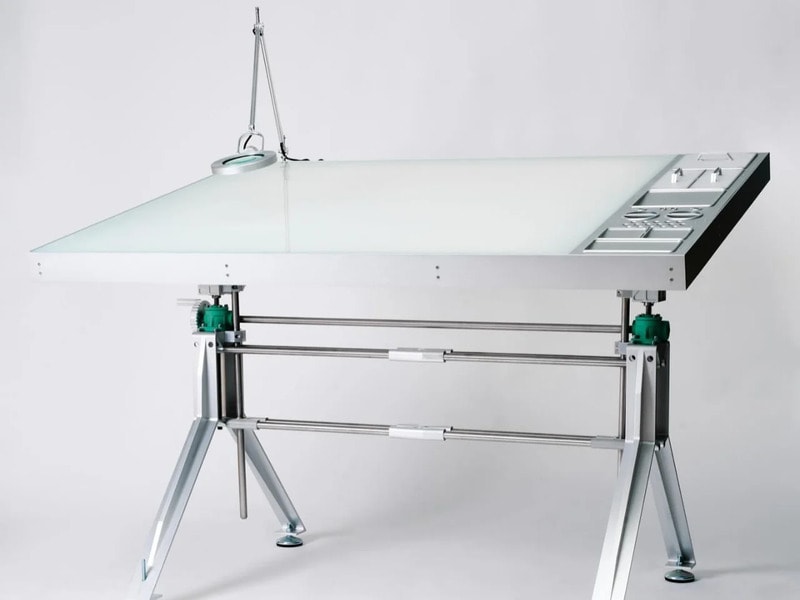
Daniel Arsham’s drafting table is a design piece that incorporates visible brass gear mechanisms and integrated utility features for drawing and workspace organization. The table’s surface is supported by a pair of geared legs that use exposed brass gears and articulating arms to adjust height and angle. These mechanical elements are engineered to move synchronously so the work surface maintains alignment when repositioned. The top plate is finished with materials suited to drawing, sketching, and drafting tasks, and the table includes built-in storage trays and cup holders recessed into the surface to hold tools and accessories.
The framed structure uses a combination of metal components for strength and precision with surface materials selected for durability during studio use. The gear assemblies are positioned where they remain visible as part of the aesthetic rather than hidden, and their finishes contrast with the table’s planar surfaces. The integrated trays and holders are sized to accommodate pens, pencils, drafting tools, and small objects to support workflow at the work surface.
Image Credit: CALIPER
What's Driving This Trend
- Visible Mechanical Aesthetics
- Exposed brass gears and articulating mechanisms are being used as decorative focal points that redefine the relationship between function and form in product design.
- Integrated Workspace Storage
- Built-in trays and recessed holders are merging tool organization with surface design to streamline creative workflows and reduce peripheral clutter.
- Precision-engineered Adjustable Furniture
- Synchronized gear-driven adjustments are enabling furniture to offer micro-precision positioning and durable, repeatable movement for professional tasks.
Who This Affects Most
- Furniture Design
- Designers are exploring hybrid pieces that combine mechanical engineering with crafted finishes to appeal to both functional and aesthetic buyer demands.
- Architectural and Drafting Tools
- Drafting equipment is shifting toward integrated, multi-functional surfaces that support analogue drawing while incorporating durable, precision hardware.
- Luxury Home Accessories
- High-end home goods are adopting visible mechanical details and premium metals to create collectible, statement-making objects that blend utility and artistry.