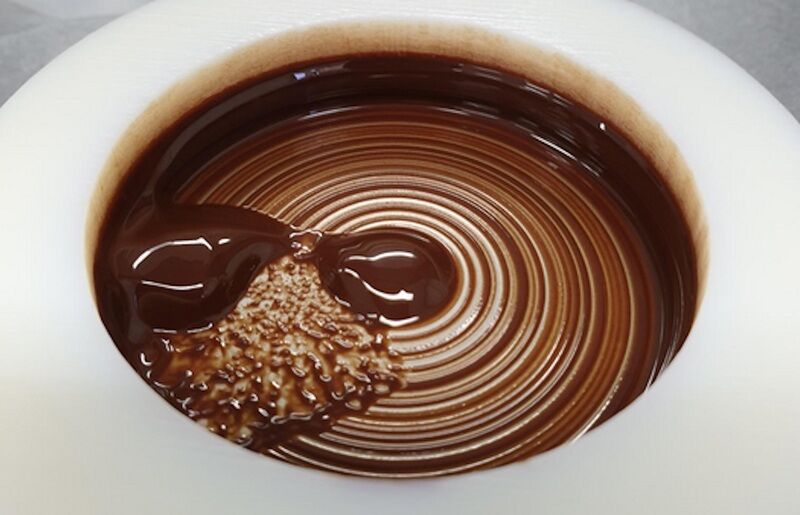
Researchers at the University of Leads call upon a team of scientists to understand how humans are attached to the rich chocolate dessert and how it coats the mouth. To do so, it develops an artificial tongue to conduct the study and analyze different indexes when eating chocolate to properly understand how it affects humans.
Using dark chocolate samples from Lindt Excellence bars on the artificial tongue, the team used a tribology engineering type to understand how surfaces and fluids interact with one another. The lead of the study Siavash Soltanahmadi speaks about the mechanism, noting that “With the understanding of the physical mechanisms that happen as people eat chocolate, we believe that a next generation of chocolate can be developed that offers the feel and sensation of high-fat chocolate yet is a healthier choice.”
Image Credit: Dr Siavash Soltanahmadi
Why This Trend Is Growing
- Artificial Tongues for Food Analysis
- The development of artificial tongues can revolutionize the food industry through advanced food analysis and ingredient testing.
- Tribology Engineering for Flavor Analysis
- Tribology engineering can be used to analyze flavor and texture interactions, creating new opportunities for food innovation.
- Health-conscious Food Innovation
- The development of healthier, high-fat food alternatives can be made possible through a better understanding of the physical mechanisms that occur during consumption.
Industries Being Reshaped
- Food Science and Technology
- Artificial tongues and tribology engineering hold potential for creating new food products with improved sensory experiences and nutritional value.
- Health and Wellness
- A greater understanding of the physical properties of food can help create healthier, more satisfying food alternatives.
- Consumer Goods
- Innovative food products that offer better sensory experiences and improved nutritional value can disrupt the food market and provide new opportunities for companies.