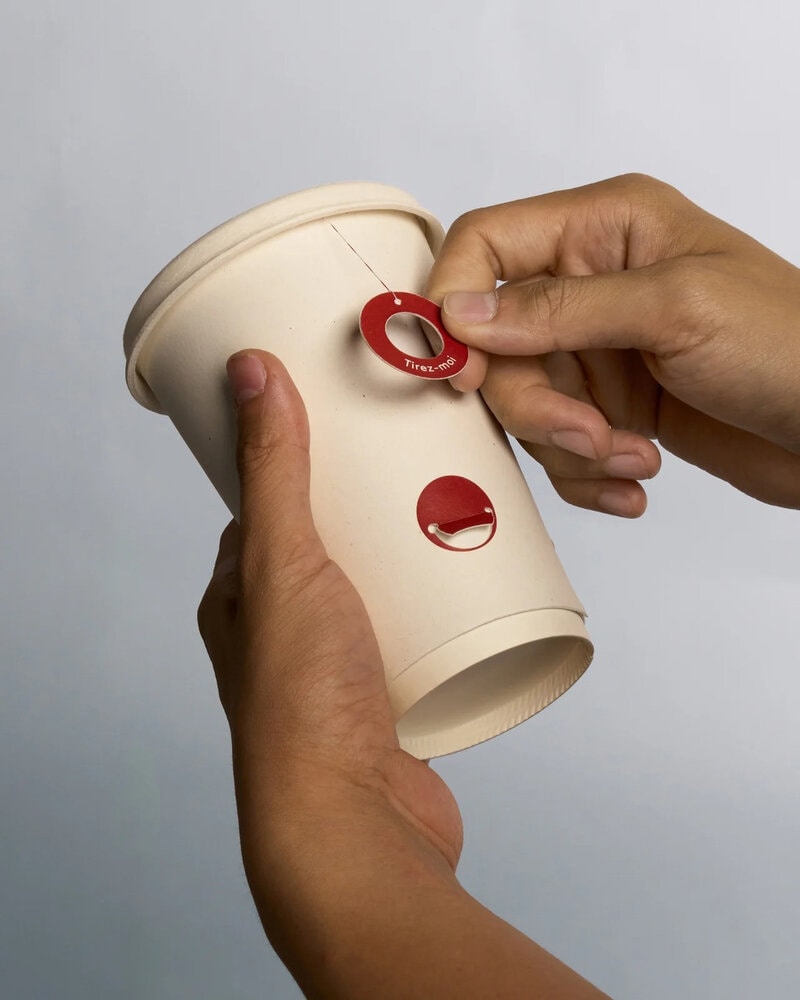
Dot to Dot is a takeaway tea packaging concept by designer Elwin Kang that combines the tea bag, lid, string and label into a single integrated system. Before serving, the recommended brewing completion time is written directly onto the lid, providing a visible reminder for when the tea should stop infusing. The concept keeps every component attached to the cup throughout the drinking experience, reducing the need to remove or discard the tea bag separately.
A circular pull label attached to the side of the cup lifts the tea bag from the water and secures it beneath the lid, stopping the brewing process while keeping the used bag contained inside the cup. The label features a central opening that aligns with a circular attachment point on the cup, creating a complete circle when secured in place. Developed as a packaging concept, the design combines brewing guidance, tea bag storage and cup closure within a single disposable takeaway format.
Image Credit: Elwin Kang
Why This Trend Is Growing
- Integrated Beverage Packaging
- Combining lids, labels, strings and infusion elements into one format points to packaging systems that reduce mess, simplify use and differentiate everyday takeaway drinks.
- Visible Brewing Guidance
- Time-marked packaging creates opportunities for foodservice brands to improve product consistency and customer confidence through low-tech, intuitive cues.
- Contained Waste Design
- Keeping used tea bags attached and enclosed within the cup reflects a shift toward disposable formats that manage residue, odor and handling friction more cleanly.
Industries Being Reshaped
- Foodservice Packaging
- Single-format packaging that merges preparation, consumption and disposal functions can reshape how quick-service operators balance convenience with operational efficiency.
- Hot Beverage Retail
- Takeaway tea concepts with built-in brewing control introduce new ways for cafés and beverage chains to elevate quality without adding staff steps.
- Sustainable Product Design
- Component-reducing disposable systems highlight potential for material-efficient designs that minimize loose accessories and improve end-of-life handling.