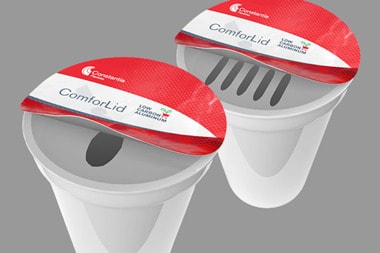
Constantia Flexibles introduced ComforLid, a patented dual-layer lid concept designed to replace snap-on plastic lids and single-use straws, featuring a separable two-film construction that streamlines disposal. The debut aimed to lower material use and improve end-of-life sorting by enabling the top and seal layers to be peeled apart for separate recycling.
The design reportedly delivers a 43% reduction in CO2 impact compared with traditional lids and straws, and it is compatible with existing sealed cups and cold-drink formats. The concept retained typical drink-opening functionality while minimizing added components and was presented as a drop-in option for beverage converters and brands.
For consumers, ComforLid offers a familiar drinking experience with fewer disposable parts and clearer recycling steps, helping reduce contamination at sorting facilities. As brands chase packaging decarbonization, a separable, low-carbon lid provides a practical route to cut emissions without changing how people drink from single-use cups.
Image Credit: Constantia Flexibles
Why This Trend Is Growing
- Dual-layer Circular Packaging
- A separable two-film construction enables easier material separation at end-of-life, creating potential for packaging formats designed specifically for high-recovery recycling streams.
- Low-carbon Drop-in Solutions
- Compatibility with existing cup formats combined with a 43% CO2 reduction suggests a class of low-emission components that can replace legacy parts without supply-chain overhaul.
- Consumer-centric Recycling Design
- Simplified user interactions that reduce contamination at sorting facilities open avenues for products engineered around recognizable consumer behaviors to improve recycling yields.
Industries Being Reshaped
- Beverage Packaging
- Separable lids present a shift toward modular package components that balance functionality with recyclability for single-serve cold-drink offerings.
- Fast Food and QSR
- Streamlined lid designs that preserve familiar drinking experiences while reducing disposable parts could redefine packaging spec standards across quick-service chains.
- Recycling and Waste Management
- Clearer material streams from peelable multilayer packaging have the potential to alter sorting protocols and investment cases for material-specific recovery technologies.